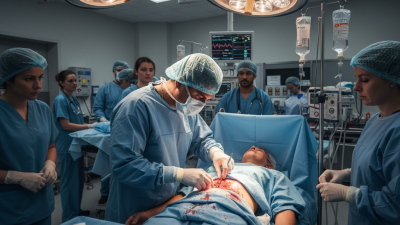

China Top 10 Spine Surgery Equipment Manufacturers for Global Buyers
Choosing spine surgery equipment is not a catalog exercise. A surgeon may compare a navigation display, an implant tray, and the feel of a driver in gloved hands. Each detail can affect workflow, but no single device guarantees a better result. Dr. Richard Fessler, a neurosurgeon known for minimally invasive spine surgery, is associated with this principle: “Minimally invasive surgery is a philosophy, not just a smaller incision.” The idea is useful here: equipment should support a considered surgical approach, not simply look advanced.
This guide examines ten China-based manufacturers serving global buyers. It considers product range, engineering capabilities, quality documentation, customization, service, and export experience. These factors matter when a buyer needs consistent instruments, clear traceability, and responsive support across borders. A polished brochure is not enough. Buyers should verify certifications, request technical files, assess training, and review the specific product intended for use. Requirements vary by market and device category.
There are limits to any ranking. Public information may be uneven, and a manufacturer’s strengths can differ between implants, instruments, and equipment. That deserves a second look. A low quoted price may not reflect the full cost of maintenance, validation, or staff training. The manufacturers below are presented as candidates for due diligence, not as automatic endorsements. For spine surgery teams and distributors, careful questions often reveal more than a showroom demonstration.

Understanding Spine Surgery Equipment and Its Main Categories
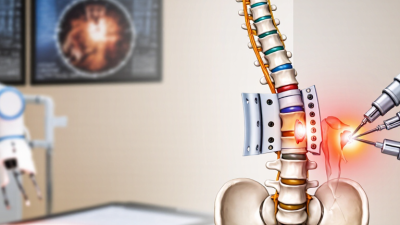
Spine surgery equipment includes the tools used to plan, access, guide, and support procedures on the vertebral column. Its main categories are imaging and navigation systems, access instruments, surgical tools, implants, and monitoring equipment. Imaging systems provide views of bone and alignment, while navigation can help teams track instruments against those images. Access tools, such as retractors, create a working corridor and help keep nearby tissue clear. Small details matter.
Surgical tools include drills, probes, and instruments for preparing bone or placing fixation components. Implants may include screws, rods, cages, or other devices selected for a specific surgical plan. Neuromonitoring equipment tracks nerve-related signals during some procedures, but it does not replace clinical judgment. Categories can overlap, and not every operation needs every system. For buyers, compatibility, sterilization requirements, training, service access, and clear documentation deserve careful review. Specifications alone are not enough. A device that performs well in a demonstration may feel different in a real operating room, so evaluation should include the intended workflow and the experience of the clinical team.
Understanding Spine Surgery Equipment and Its Main Categories
Illustrative order of equipment groups in a typical spine surgery workflow. The sequence can vary by procedure; values show workflow position, not market share or usage frequency.
How to read: Imaging and navigation support planning and guidance; access and retraction instruments provide surgical access; decompression tools remove bone or tissue as needed; fixation systems and implants stabilize the spine; verification and closure tools support final checks and wound closure.
How China’s Spine Surgery Equipment Industry Is Organized
China’s spine surgery equipment industry is organized around several connected specialties, rather than one uniform manufacturing base. Some companies focus on implants such as screws, rods, cages, and plates. Others produce surgical instruments, including drivers, trial components, and sterilizable trays. Imaging, navigation, and operating-room systems form a related but distinct segment. The boundaries blur. A supplier may design one component, outsource precision machining, and assemble or inspect the finished product in-house.
Manufacturers also differ in how they serve overseas buyers. Some develop products under their own technical documentation; others provide contract production or adapt designs to a buyer’s specifications. For procurement teams, the practical question is not just factory capacity. Ask how materials are traced, dimensions are checked, and instruments are cleaned and packaged. Request product-specific records and sample components, then compare them with the intended surgical workflow. A polished catalog is not proof of consistent production. That distinction can be easy to miss. Supplier capability may vary by product line, even within the same facility, so evaluation should focus on the exact equipment being sourced.
Criteria for Evaluating Chinese Spine Equipment Manufacturers
Demand alone is a poor selection tool. The World Health Organization’s 2023 low back pain fact sheet reports that 619 million people experienced low back pain in 2020, with cases projected to reach 843 million by 2050. This burden highlights the need for dependable spinal care, but it does not prove that any particular device is suitable. Buyers should assess each manufacturer’s product scope, engineering controls, and evidence for intended use.
Ask for evidence. Request current ISO 13485 certification, product-specific technical files, and clear records of design changes. Confirm that sterilization, packaging, and shelf-life claims are supported by validation data. For implants and instruments, review material specifications, dimensional inspection results, and traceability from raw materials to finished lots. A polished catalogue cannot replace these records. Nor should a certificate be treated as proof of clinical performance.
Clinical support deserves equal scrutiny. Look for published studies or well-documented clinical evaluations relevant to the device and patient population. Ask how complaints, field feedback, and corrective actions are recorded and reviewed. A factory audit can reveal practical details: calibrated inspection tools, controlled storage, and consistent lot labeling. No checklist is perfect; documentation may be strong while evidence for a specific indication remains limited. Buyers should record that uncertainty and verify regulatory requirements in each destination market.
China’s Top 10 Spine Surgery Equipment Manufacturers for Global Buyers
For global buyers, comparing China’s top 10 spine surgery equipment manufacturers should begin with product scope, not a ranking alone. A supplier may focus on spinal implants, while another produces surgical instruments or operating-room systems. These categories require different technical reviews. Ask for material specifications, dimensional drawings, sterilization information, and batch traceability records. A clean document set matters.
Look closely at how products are made. During an audit, review incoming-material checks, machining controls, packaging areas, and procedures for handling nonconforming parts. Request samples and inspect surfaces, markings, and packaging consistency. For implants, confirm that applicable testing and regulatory documentation match the exact product and target market. Do not assume one certificate covers every model. Details matter.
Clinical fit is just as important. Discuss instrument compatibility, training, spare-part availability, and response times with the manufacturer. Ask how design changes are communicated and recorded. A useful trial may expose small problems, such as a handle that feels awkward with gloves or a label that is hard to read. Rankings can save time, but they cannot replace due diligence. Honestly, supplier comparisons are rarely tidy; some records need clarification, and buyers should say so before placing an order.
Key Considerations for Sourcing and Verifying Equipment Internationally
When comparing spine surgery equipment manufacturers, verify the exact product, factory, and destination market—not just a polished catalogue. The WHO’s 2017 Global Atlas of Medical Devices compiled responses from 140 countries, reflecting the varied regulatory capacity buyers may encounter. Ask for current registration evidence applicable to your market, and confirm it with the relevant authority where possible. Check that the certificate covers the manufacturing site and product category being offered. A certificate alone is not product approval.
The ISO Survey 2023 reported 36,966 ISO 13485 certificates worldwide. This is useful context, but certification does not confirm that a particular implant or instrument is suitable for your hospital. Request traceable lot records, sterilization validation, material specifications, and cleaning instructions. For powered tools, ask for maintenance intervals and compatible accessories in writing. Then compare those documents with the delivered labels and packaging. Small mismatches matter. A serial number that differs across the box, implant record, and invoice can complicate follow-up. Independent technical review is worthwhile, especially when instrument compatibility or local service support remains unclear. I would also test the proposed workflow with surgeons and sterile-processing staff; procurement documents rarely capture every practical snag.
China Top 10 Spine Surgery Equipment Manufacturers for Global Buyers - Key Considerations for Sourcing and Verifying Equipment Internationally
This table is a practical, non-ranked sourcing and verification framework for spine-surgery equipment. It does not identify or rank individual manufacturers. Regulatory requirements vary by destination market, device classification, and intended use; buyers should confirm current requirements with the relevant authority or qualified regulatory adviser.
| Equipment Category | Key Technical Checks | Documents and Evidence to Request | International Sourcing Considerations |
|---|---|---|---|
| Spinal fixation and implant systems | Confirm intended spinal region, compatible components, material specifications, size range, labeling, and traceability for each implant. | Destination-market authorization where applicable; device and material specifications; risk-management documentation; lot or serial-number traceability; sterilization and shelf-life evidence for sterile products. | Verify that the exact model and configuration are authorized for the destination market. Check that implant labeling, instructions for use, and traceability information meet local requirements. |
| Surgical instruments and instrument sets | Check compatibility with the specified implant system, instrument completeness, dimensional accuracy, corrosion resistance, and expected service life. | Instrument list and drawings; material information; inspection or quality-control records; validated cleaning and reprocessing instructions; replacement-part information. | Confirm that reusable instruments can be reprocessed using methods available at the receiving hospital. Request clear instructions for cleaning, inspection, sterilization, and maintenance. |
| Powered surgical drills and drivers | Assess speed and torque controls, handpiece compatibility, battery or cable configuration, heat management, and suitability for the stated surgical use. | Electrical safety and electromagnetic compatibility evidence where applicable; operating and maintenance manuals; battery documentation; service and calibration procedures. | Check voltage, plug, charging, and power-frequency compatibility. Confirm local availability of batteries, consumables, repairs, and trained technical support. |
| Intraoperative imaging systems | Review image quality, field of view, dose-control functions, detector configuration, and compatibility with the operating-room workflow. | Radiation-safety documentation; equipment specifications; installation and acceptance-test records; operator training materials; preventive-maintenance schedule. | Confirm import, installation, and radiation-control requirements in the destination country. Check room dimensions, shielding needs, facility power, and local servicing capability. |
| Surgical navigation systems | Verify supported procedures, tracking method, registration workflow, compatible instruments, and performance under the intended operating-room conditions. | System configuration and software-version records; user and service manuals; software validation information where relevant; cybersecurity and update policies. | Confirm local-language documentation where required, software-update arrangements, data-handling terms, and whether compatible imaging formats and hospital IT systems are supported. |
| Intraoperative neuromonitoring equipment | Check supported monitoring modalities, channel capacity, stimulation controls, alarm functions, and compatibility with electrodes and accessories. | Electrical safety and EMC evidence where applicable; accessory compatibility list; operating instructions; maintenance records; user-training requirements. | Verify that electrodes and other consumables are available through authorized supply channels and that local clinical and technical staff can be trained on the system. |
| Spinal endoscopy systems | Assess endoscope dimensions, visualization, irrigation connections, compatible instruments, and the complete set of required accessories. | Optical and device specifications; cleaning and reprocessing instructions; inspection criteria; repair process; documentation for supplied accessories. | Check compatibility with local reprocessing equipment and confirm repair turnaround, spare-part availability, and replacement options for damaged scopes. |
| Operating-room positioning and support equipment | Review patient-load limits, adjustment range, attachment compatibility, stability, and safe positioning for the intended procedures. | Load and dimensional specifications; installation instructions; inspection and maintenance schedule; safety warnings; compatibility details for accessories. | Confirm compatibility with the hospital’s operating table, room layout, transport routes, and applicable local electrical or equipment-safety requirements. |
| Sterile packaging and sterile single-use accessories | Check sterile barrier integrity, packaging configuration, product shelf life, storage conditions, and single-use labeling where applicable. | Sterilization method and validation evidence; packaging validation information; batch-release records; expiry and storage details; instructions for use. | Verify that transport conditions preserve packaging integrity and that import, labeling, and language requirements are met before products are distributed or used. |
| Installation, training, and after-sales support | Assess installation scope, response times, preventive maintenance, software support, spare parts, and training coverage for clinical and technical users. | Written service-level terms; technician qualifications; maintenance and calibration procedures; training plan; warranty and escalation contacts. | Confirm who is responsible for customs documentation, installation, local regulatory obligations, repairs, and ongoing support. Put response times and parts availability in the contract. |
Commonly relevant quality and safety references may include ISO 13485 for medical-device quality management, ISO 14971 for risk management, and applicable IEC electrical-safety or EMC standards for powered equipment. Applicability depends on the specific device and market; certification or a test report should be verified against the exact model and current regulatory requirements.
Related Posts
-
What Are the Top Spine Surgery Techniques?
-
China Top 10 Spine Surgery Device Manufacturers
-
2026 How to Choose Advanced Orthopedic Surgery Techniques for Better Recovery?
-
7 Tips for Effective Spinal Disorder Treatment?
-
Digital Insights on Best Practices in Orthopedic Trauma Care?
-
Why is Trauma Surgery Essential for Emergency Medical Care?