
Why Is Orthopedic Implant Technology Important?

Why is orthopedic implant technology important? The answer begins with scale. The World Health Organization estimates that musculoskeletal conditions affect approximately 1.71 billion people worldwide. These conditions can turn simple actions into daily challenges, such as climbing stairs, gripping a cup, or standing from a chair. Orthopedic implants help restore movement when damaged joints, bones, or tissues cannot recover adequately through conservative treatment.

The technology involves more than metal components placed inside the body. Engineers study titanium alloys, cobalt-chromium materials, ceramics, polymers, surface coatings, and additive manufacturing methods. Surgeons also evaluate anatomy, bone quality, alignment, patient age, activity level, and infection risk. The American Academy of Orthopaedic Surgeons identifies joint replacement as an important response to rising osteoarthritis and aging populations. Still, an implant is never a guaranteed success. Patient biology matters.

Industry data reinforces this need. Grand View Research reports continued growth in the global orthopedic devices market, driven by trauma care, joint replacement, sports injuries, and improved implant design. Market forecasts differ because analysts use different product definitions and regional assumptions. That limitation deserves attention. Technology can improve fixation, reduce wear, support minimally invasive procedures, and enable more personalized implants. However, long-term evidence remains essential. The U.S. Food and Drug Administration emphasizes post-market monitoring, adverse-event reporting, and device safety throughout an implant’s lifecycle. Real progress therefore depends on measurable outcomes, careful regulation, surgical experience, and honest follow-up. The most advanced implant is not always the best choice. Reliability must come before novelty.
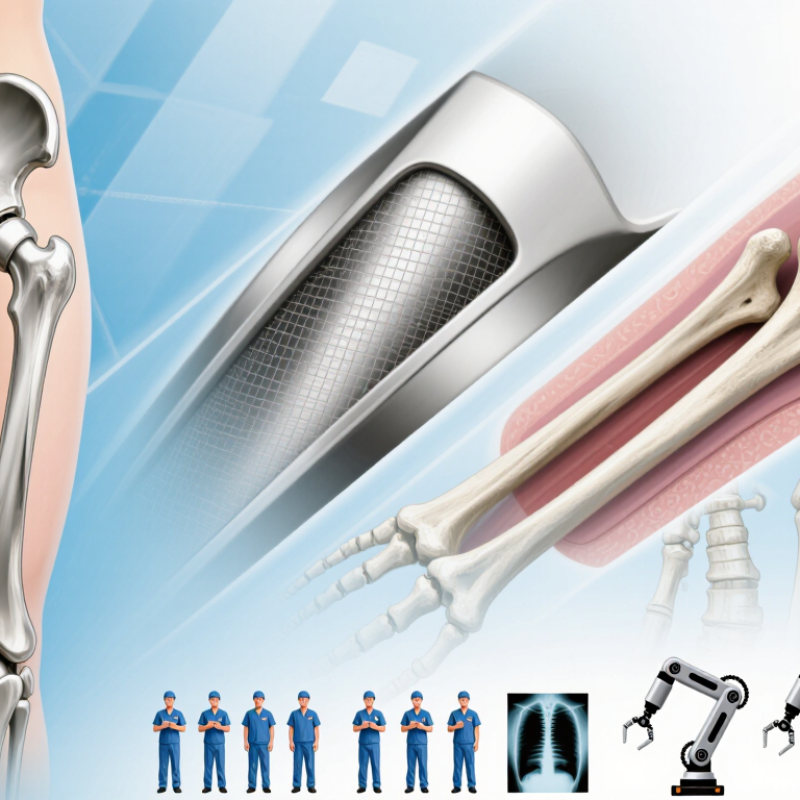
Why Is Orthopedic Implant Technology Important?

Clinical Need: Over 1 Million U.S. Hip and Knee Replacements Each Year (AAOS)

Why Is Orthopedic Implant Technology Important?

The American Academy of Orthopaedic Surgeons reports more than one million hip and knee replacements each year in the United States. This large clinical need affects patients, surgeons, hospitals, and rehabilitation teams. Many patients struggle with severe arthritis, damaged cartilage, or previous injuries. Pain may make simple tasks difficult, such as climbing stairs, standing from a chair, or walking across a room.

Orthopedic implant technology helps restore joint movement and reduce pain. Modern designs focus on stable fixation, durable materials, and natural joint motion. Surgeons also use imaging, surgical planning, and patient-specific measurements to select an appropriate implant. A patient’s bone quality, age, activity level, and medical history all matter. One solution does not fit everyone.

The technology is not flawless. Implants can loosen, wear, or require revision surgery. Recovery also depends on muscle strength, physical therapy, weight management, and realistic expectations. Small alignment errors may affect comfort and long-term function. That detail is easy to underestimate. Clinical decisions must therefore combine research, surgical judgment, careful follow-up, and honest conversations with patients. AAOS guidance can inform practice, but individual evaluation remains essential. Some outcomes are still difficult to predict, and that uncertainty deserves attention rather than confident promises.

Why Is Orthopedic Implant Technology Important? - Clinical Need: Over 1 Million U.S. Hip and Knee Replacements Each Year (AAOS)
Clinical Dimension Data or Current Estimate Why It Matters for Implant Technology
Annual U.S. Procedure Volume More than 1 million hip and knee replacement procedures are performed in the United States each year. High procedure volume creates a significant need for reliable, durable, and scalable implant systems.
Primary Clinical Indications Advanced osteoarthritis is the leading indication. Other indications include inflammatory arthritis, post-traumatic joint damage, osteonecrosis, and fractures involving the joint. Implants must accommodate different patterns of bone loss, deformity, inflammation, activity level, and patient anatomy.
Most Commonly Replaced Joints The hip and knee are the two most frequently replaced major joints in the United States. Technology must support both load-bearing stability and natural-feeling movement across different joint designs.
Primary Treatment Objective Reduce pain, improve joint function, restore mobility, and support activities of daily living when non-surgical treatment is no longer effective. Implant design is evaluated by its ability to restore motion, maintain alignment, and provide dependable fixation.
Patient Age Profile Most recipients are older adults, although younger patients may also require replacement because of trauma, congenital conditions, inflammatory disease, or severe joint damage. Older patients may need dependable long-term function, while younger and more active patients may place greater demands on implant wear resistance and revision planning.
Expected Implant Longevity Many contemporary hip and knee replacements function for 15 years or longer, but longevity varies according to patient factors, implant design, activity, fixation, and surgical technique. Improved materials, surface engineering, fixation methods, and anatomical fit can help reduce wear, loosening, and revision risk.
Common Reasons for Revision Revision surgery may be required because of infection, implant loosening, instability, dislocation, fracture near the implant, wear-related bone loss, or recurrent pain. Modern technology focuses on infection prevention, secure fixation, improved stability, wear reduction, and easier revision procedures.
Implant Material Requirements Implant materials must provide biocompatibility, mechanical strength, corrosion resistance, wear resistance, and compatibility with the surrounding bone and soft tissue. Material selection directly affects durability, biological response, load transfer, and the risk of adverse tissue reactions.
Patient-Specific Anatomy Bone size, shape, alignment, bone quality, ligament condition, and overall limb geometry vary substantially between patients. Accurate sizing, a broad range of implant geometries, and planning technologies help surgeons achieve better anatomical reconstruction.
Functional Recovery Recovery commonly involves early mobilization, structured physical therapy, pain management, and gradual return to normal activities. Recovery time varies by procedure and patient health. Implant stability and accurate alignment can support earlier movement and more predictable rehabilitation when combined with appropriate clinical care.
Population-Level Need Demand is influenced by population aging, increasing rates of obesity, longer life expectancy, improved diagnosis, and patients seeking to remain active later in life. Orthopedic implant technology must deliver consistent outcomes across a growing and increasingly diverse patient population.
Value of Clinical Evidence Safety, effectiveness, survivorship, revision rates, patient-reported outcomes, and functional improvement are key measures used to assess replacement procedures. Long-term clinical evidence helps determine whether new implant designs provide meaningful advantages over established treatment options.
Reference basis: American Academy of Orthopaedic Surgeons (AAOS) educational materials on hip and knee replacement, supported by established orthopedic clinical evidence. Procedure volumes and outcomes vary by year, data source, patient population, and definition of primary versus revision surgery.

Patient Value: More Than 90% of Hip Implants Last 10 Years (NJR)

Orthopedic implant technology matters because it can restore movement, reduce pain, and support everyday independence. The National Joint Registry (NJR) reports that more than 90% of hip implants last at least 10 years. For a patient, this figure can turn a difficult decision into a more understandable one. Ten years may mean walking to work, lifting a child, or climbing familiar stairs without constant hip pain.

Durability depends on more than the implant itself. Surgeons consider bone quality, joint anatomy, activity level, and surgical technique. Modern imaging and careful implant positioning can improve planning before the operation. During recovery, physiotherapy helps patients rebuild strength and safer movement patterns. Small details matter, such as using a walking aid correctly or following weight-bearing instructions. The result is never guaranteed.

Statistics describe groups, not individual futures. That is easy to forget. An implant may last longer than ten years, while another may need revision earlier. Age, health conditions, falls, infection, and demanding physical activity can affect performance. Patients should ask how the NJR data applies to their age and implant type. They should also discuss warning signs, follow-up schedules, and realistic activity goals with a qualified orthopedic professional. Ten years is encouraging, but it is not a promise.

Design Science: Titanium and Cobalt-Chrome Balance Strength and Biocompatibility

Why Is Orthopedic Implant Technology Important?

Orthopedic implants must carry repeated loads while remaining compatible with living tissue. Titanium is valued for its low density, corrosion resistance, and bone-friendly surface behavior. It can also flex slightly, which may help reduce stiffness between the implant and surrounding bone. Cobalt-chrome offers greater hardness and wear resistance. It is useful where surfaces experience repeated friction, such as joint components. The balance matters. An implant that is too stiff may transfer stress unevenly. One that wears too quickly may release unwanted particles. Engineering practice shows that material choice alone cannot guarantee clinical success.

Tips: Review strength, fatigue life, surface finish, and imaging needs together. Ask how the material behaves inside the body over many years. Patient anatomy matters. So does surgical technique. Small design details can change loading patterns.

No alloy is perfect. Titanium may scratch more easily, while cobalt-chrome can create a heavier, stiffer structure. These trade-offs require laboratory testing, biocompatibility assessment, and careful clinical judgment. Reliable evaluation includes simulated body fluids, repeated-load testing, and inspection of surface changes. Yet laboratory results do not reproduce every patient’s movement, bone quality, or healing response. That limitation deserves honesty. Designers should examine unexpected results instead of hiding them. Surgeons and engineers also need clear evidence about manufacturing quality, implant geometry, and long-term monitoring. Good orthopedic technology is not simply stronger metal; it is thoughtful design shaped by biology, mechanics, and real patient experience.

Why Is Orthopedic Implant Technology Important?

Titanium alloys and cobalt-chromium-molybdenum alloys are widely used in orthopedic implants because they combine mechanical performance with established biocompatibility. Titanium is lighter and more compliant, while cobalt-chrome generally provides higher stiffness and wear resistance.

Representative values: Ti-6Al-4V and cobalt-chromium-molybdenum implant alloys. Actual properties vary with alloy grade, heat treatment, manufacturing method, and test standard. Biocompatibility is not represented as a single numerical value because it depends on surface condition, processing, and biological context.

Digital Progress: 3D Printing Enables Patient-Specific Implants (FDA)

Orthopedic implant technology matters because bone shapes are rarely identical. A standard implant may fit well, yet leave difficult gaps around damaged anatomy. Digital imaging can convert a patient’s CT scan into a three-dimensional surgical model. Engineers can then design an implant matching the patient’s bone geometry.

The FDA describes additive manufacturing as a pathway for producing patient-matched medical devices. Its 2017 guidance emphasizes design controls, material safety, process validation, and reproducible testing. These requirements matter because a precise shape is not enough. The implant must also withstand repeated loading inside the body. Small manufacturing variations can become serious clinical concerns.

The industry is expanding quickly. Wohlers Report 2024 estimated global additive manufacturing revenue reached about 20.0 billion dollars in 2023, rising 13.5 percent from 2022. Orthopedic applications benefit from porous structures that may encourage bone integration. They can also reduce unnecessary material and support complex reconstruction. However, digital planning is not automatically superior. Patient movement, imaging errors, and limited surgical data can affect the final design. The technology still needs long-term clinical evidence, not only attractive computer models. That is the uncomfortable part. Accuracy must be proven after implantation, not merely displayed before surgery.

Long-Term Impact: About 7 Million Americans Live With Joint Replacements (AJRR)

Orthopedic implant technology matters because replacement surgery changes ordinary moments. A morning walk, a staircase, or rising from a chair can depend on implant stability. The American Joint Replacement Registry reports that about 7 million Americans live with hip or knee replacements. That number represents millions of long-term recovery stories, not only operating-room procedures. Each implant must tolerate repeated loading, changing activity levels, and the patient’s natural aging process.

Long-term evidence helps surgeons examine what happens after discharge. AJRR’s annual reports track revision procedures, patient characteristics, and implant outcomes across participating facilities. These records can reveal patterns that a single hospital may miss. The Centers for Disease Control and Prevention also estimates that osteoarthritis affects more than 32 million U.S. adults, suggesting continued demand for joint reconstruction. Small design choices matter. Surface wear, alignment, fixation, and implant movement can influence pain years later. Sometimes, the outcome is less predictable than expected. That deserves honest discussion.

Patient experience remains part of the evidence. A registry cannot fully measure confidence on uneven ground or discomfort after a long car ride. Follow-up visits, imaging, and patient-reported outcomes add that missing human detail. Technology should support these measurements, not replace clinical judgment. The seven-million-person figure is compelling, but it is not perfectly simple. Definitions, reporting coverage, and replacement types can vary between studies. Careful interpretation matters when decisions may affect decades of movement.

Menu
Quick Contact
close slider


error: Content is protected !!