2026 Top Fracture Fixation Methods What Should Buyers Know?
In 2026, fracture fixation methods are becoming more precise, adaptable, and evidence-driven. Buyers must look beyond implant price. The real question is simple: will the chosen system support healing, safe surgery, and reliable recovery?
Professor Stephan Perren, a respected authority in orthopaedic trauma, emphasized a central principle: “Fracture healing depends on both mechanics and biology.” That reminder still matters. A locking plate may provide strong angular stability, but it cannot replace careful reduction or soft-tissue protection. An intramedullary nail can support early movement, yet poor sizing may cause alignment problems. Small details matter.
The strongest purchasing decisions compare plates, screws, intramedullary nails, external fixators, and hybrid systems against actual clinical needs. Buyers should examine implant materials, fatigue strength, screw compatibility, instrument quality, sterilization processes, and training support. They should also review clinical evidence, revision rates, and performance across elderly, osteoporotic, and high-energy fracture cases.
Look closely at workflow.
A crowded instrument tray can slow a procedure. Unclear sizing guides can create avoidable errors. Supplier reliability also matters when an urgent case needs replacement components. These points are practical, but they are sometimes overlooked during procurement discussions.
No fixation method is perfect. A technically advanced system may still fail when patient biology, fracture complexity, or surgeon experience is ignored. That uncomfortable limitation deserves attention. This guide evaluates the leading fracture fixation methods for 2026, helping hospitals and professional buyers balance stability, biological preservation, usability, cost, and long-term patient outcomes.
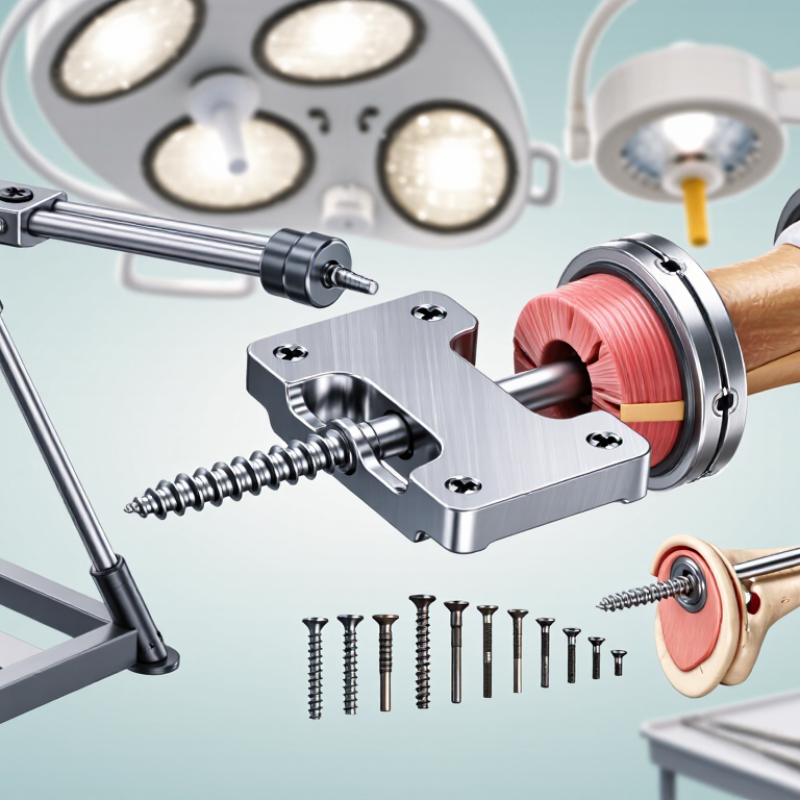
2026 Fracture Fixation Map: AO/OTA Classification and Buyer Metrics
2026 Top Fracture Fixation Methods: What Should Buyers Know?
AO/OTA classification gives buyers a common language for fracture location and complexity. It separates bone, segment, type, group, and subgroup. That structure matters when comparing fixation methods. A simple fracture may suit screws or a plate, while a multifragmentary pattern can demand stronger load sharing. Not every case follows the textbook. CT findings, bone quality, soft-tissue condition, and surgeon experience can change the plan.
Procurement teams should map each target fracture group to measurable device requirements. For plates, review contour options, hole design, screw range, and resistance to bending. For intramedullary nails, assess diameter choices, locking options, targeting accuracy, and insertion control. External fixation requires stable clamps, adaptable frames, and straightforward adjustment. Look beyond catalog breadth. Ask for fatigue data, dimensional tolerances, sterilization instructions, and lot-level traceability. These details support safer evaluation, but they do not replace clinical judgment.
Buyer metrics should include operative time, instrument completeness, radiographic union, complication rates, revision frequency, and training needs. Data should be separated by AO/OTA pattern, not blended into one attractive average. That distinction is easy to miss. A low price may hide extra trays, longer setup, or limited availability. Conversely, a technically advanced system may be excessive for common, stable fractures. Review actual case volumes, surgeon feedback, and local follow-up data before setting specifications. Some evidence will remain incomplete. That uncertainty deserves documentation, not optimistic wording.
2026 Top Fracture Fixation Methods: What Should Buyers Know?
2026 Fracture Fixation Map: AO/OTA Classification and Buyer Metrics
Plate and Screw Fixation
Commonly selected when anatomical reduction and stable fixation of accessible fracture segments are priorities.
Intramedullary Nailing
Frequently evaluated for long-bone fractures where load sharing and minimally invasive access are relevant.
External Fixation
Useful when soft-tissue condition, damage-control strategy, or staged treatment affects the fixation plan.
AO/OTA Decision Layer
Fracture location, type, group, and subgroup help buyers align implant options with clinical indications.
The chart shows the estimated global fracture burden reported for 2019: 178 million new fractures, 455 million prevalent cases, and 25.8 million years lived with disability. These measures are presented in millions and should not be interpreted as directly comparable clinical outcomes.
Source: Global Burden of Disease Study 2019 analysis of bone fractures, published in The Lancet Healthy Longevity. Buyer evaluation should also consider indication coverage, material and coating specifications, instrument compatibility, sterilization workflow, traceability, regulatory status, and total cost of ownership.
Intramedullary Nails: Union Rates Above 90% in Many Long-Bone Studies
For 2026 fracture fixation decisions, buyers should examine union evidence, not only implant prices. Intramedullary nails show union rates above 90% in many long-bone studies. A 2020 American Academy of Orthopaedic Surgeons guideline supports intramedullary nailing for many adult tibial shaft fractures. A 2023 systematic review in Injury also reported generally high union rates for nailed femoral and tibial fractures, although definitions differed between studies.
The practical detail matters. Surgeons assess fracture level, bone quality, soft-tissue damage, and alignment before selecting nail diameter and locking options. Reaming may improve stability, but it can increase operative time and thermal risk when technique is poor. Dynamic locking may support controlled loading, while unstable patterns often need stronger locking. Not every fracture heals quickly. Smoking, infection, diabetes, and severe comminution can reduce union probability, even with accurate fixation. The SPRINT trial reported fewer reoperations for some reamed tibial fractures, but its findings should not be treated as universal. Buyers should request independent clinical data, follow-up duration, nonunion definitions, and complication rates. A headline above 90% is useful. It is not the whole decision.
2026 Top Fracture Fixation Methods: What Should Buyers Know? — Intramedullary Nails: Union Rates Above 90% in Many Long-Bone Studies
Representative clinical ranges reported in orthopedic literature; outcomes vary by fracture pattern, soft-tissue condition, open versus closed injury, patient factors, and surgical technique.
| Long-Bone Indication |
Typical Nail Configuration |
Reported Union Rate |
Typical Radiographic Union Time |
Weight-Bearing Profile |
Common Clinical Advantages |
Key Buyer Evaluation Points |
| Femoral shaft fractures |
Reamed, locked antegrade intramedullary nail |
Approximately 90–98% |
About 16–24 weeks |
Early protected weight bearing is commonly possible; progression depends on stability and healing. |
Strong load sharing, minimally invasive approach, reliable alignment control, and favorable union performance. |
Check nail length, diameter range, locking options, curvature, targeting accuracy, and compatibility with fracture location. |
| Tibial shaft fractures |
Locked tibial intramedullary nail; reaming selected according to case |
Approximately 85–95%; often above 90% in suitable closed-fracture series |
About 20–32 weeks |
Variable; stable patterns may permit early loading, while comminuted or open injuries require protection. |
Preserves much of the fracture biology and provides effective axial load sharing. |
Assess distal and proximal locking control, bend stability, soft-tissue access, and options for difficult metaphyseal segments. |
| Subtrochanteric femoral fractures |
Long cephalomedullary nail with proximal head–neck fixation |
Approximately 90–97% in appropriately reduced cases |
About 16–24 weeks; delayed healing is possible in high-energy or comminuted patterns. |
Weight bearing is individualized; construct stability and medial cortical support are important. |
Combines proximal femoral fixation with a load-sharing shaft construct and usually requires limited exposure. |
Review proximal targeting, neck–shaft angle options, anti-rotation control, distal locking, and resistance to varus collapse. |
| Humeral shaft fractures |
Antegrade or retrograde locked humeral nail |
Approximately 85–95%; commonly above 90% in selected series |
About 12–20 weeks |
Functional use is progressed according to fixation stability, pain, and radiographic healing. |
Reduced soft-tissue stripping and useful fixation for selected pathological, segmental, or osteoporotic cases. |
Evaluate shoulder-related risks with antegrade entry, distal locking accuracy, fracture-length coverage, and radial-nerve considerations. |
| Distal tibial fractures |
Distal-locking tibial nail, often with reduction aids or adjunct fixation |
Approximately 85–95% in selected extra-articular patterns |
About 20–32 weeks |
Usually protected initially; loading is advanced after alignment and early callus are confirmed. |
May reduce wound exposure compared with extensive plating, particularly when soft-tissue conditions are unfavorable. |
Prioritize distal multiplanar locking, control of valgus or recurvatum, nail–canal fit, and compatibility with reduction tools. |
Procurement note: Union rates are study-dependent clinical ranges rather than guaranteed device performance. For purchasing decisions, compare independent clinical evidence, instrument completeness, locking-screw accuracy, size availability, sterilization workflow, training requirements, radiographic control, and total procedure cost.
Locking Plates: Bridge Fixation and Reported 80–95% Union Benchmarks
Locking plates are commonly chosen when a fracture needs stable alignment without stripping the surrounding biology. Used as bridge fixation, the plate spans the injured zone like an external support beam. The fracture gap remains relatively undisturbed. Reported union benchmarks of 80–95% can look reassuring, but they are not universal promises. That range needs context.
Successful bridge fixation
depends on plate length, screw distribution, fracture pattern, and soft-tissue condition. Longer plates often spread mechanical stress across more bone. Fewer screws near the fracture may preserve controlled flexibility. The construct should feel stable, not excessively rigid. Small details matter.
Buyers should examine evidence behind every claimed union rate. Was healing confirmed by radiographs, computed tomography, or clinical assessment? Were open fractures, smoking, infection, or poor bone quality included? These factors can change results sharply. A high percentage may describe a carefully selected patient group, not everyday practice. The uncomfortable point is that published benchmarks can hide variation. Experienced surgical teams still adjust fixation plans during treatment. Product evaluation should include material quality, locking performance, hole accuracy, instrumentation, and available plate geometries. A cheaper system may create delays if fitting is difficult. The best choice supports sound surgical judgment, rather than replacing it.
External Fixators: Damage Control for Gustilo III Open Fractures
External fixators are a practical damage-control option for Gustilo III open fractures. They stabilize unstable bone without placing a permanent implant into a heavily contaminated wound. Their modular frames also leave space for repeated debridement, wound inspection, and soft-tissue coverage.
Speed matters. The FLOW trial, published in the New England Journal of Medicine, included 2,447 patients with open fractures and showed that irrigation strategy can influence reoperation risk. The study reinforces one point: fixation cannot replace disciplined wound management. AAOS guidance also supports early antibiotics, thorough debridement, and coordinated orthoplastic care for severe extremity trauma.
External fixation is not glamorous.
For buyers, look for radiolucent components, adjustable clamps, strong carbon or metal rods, and tools that support rapid assembly. Pin stability matters. So does access around the wound. A poorly planned frame may block flap coverage or complicate later internal fixation.
Pin-site infection, frame loosening, and loss of alignment remain real concerns. Gustilo III injuries also vary widely, so one standard kit cannot fit every case. Buyers should evaluate surgeon experience, operating-room workflow, sterilization capacity, and local repair support. The British Orthopaedic Association’s BOAST-4 standard emphasizes coordinated trauma care, not hardware alone. That distinction is easy to miss. A cheaper frame may become expensive when adjustments, replacement parts, or delayed reconstruction enter the picture.
Buyer Due Diligence: FDA/CE Status, Revision Rates, Sterility, and TCO
In 2026, buyers should verify regulatory status before comparing fracture fixation prices. FDA 510(k) clearance means substantial equivalence, not clinical superiority. Check the clearance number, intended use, indications, and exact product configuration. In Europe, confirm the CE certificate, notified body, UDI, and post-market surveillance records under the Medical Device Regulation. A certificate may cover one plate family, not every screw or coating.
Revision data needs careful interpretation. A 2024 review in the Journal of Orthopaedic Trauma reported that reoperation rates varied widely across fracture types, fixation methods, and follow-up periods. The FDA MAUDE database contains adverse-event reports, but the agency warns that it cannot calculate true event rates from those reports. Compare like with like: infection, nonunion, implant breakage, and planned hardware removal are different outcomes. The evidence is messier than a sales spreadsheet.
Tips: Request three years of complaint, recall, and revision data by model. Ask for sterilization validation under ISO 11135 or ISO 11137, plus bioburden and packaging tests under ISO 11737. Inspect seals, labels, and expiry dates during receiving. Calculate total cost of ownership, including instruments, training, freight, consignment inventory, reoperations, and disposal. A cheaper implant can become expensive after one avoidable revision. One gap remains: supplier-reported rates may lack independent verification, so buyers should record assumptions and revisit them annually.