

What Is the Difference Between Pads and Diapers?

What Is the Difference Between Pads and Diapers?

Choosing between Pads Diapers products can feel simple, but the details matter. Pads are designed to absorb liquid after it leaves the body. Diapers hold liquid and waste inside a shaped, close-fitting garment. That difference affects comfort, leakage control, skin protection, and daily movement.

Continence specialist Dr. Diane K. Newman offers a useful principle: “The right product should fit the person, not force the person to fit the product.” Fit matters. A pad may suit light bladder leakage, especially when the wearer can use regular underwear. A diaper may provide stronger protection for heavier leakage, bowel incontinence, babies, or people needing assistance with changing. Product names can confuse buyers. Some “adult diapers” are actually pull-ups, while some protective underwear behaves more like a diaper.

Look at absorbency, size, fastening style, breathability, and changing needs. Check the skin after use. Redness, dampness, or rubbing should not be ignored. The most absorbent option is not always the best option. It may feel bulky, shift during walking, or encourage delayed changing. That is an easy mistake.

This guide will compare Pads Diapers by purpose, structure, fit, comfort, hygiene, and practical cost. It will also question common marketing claims. No product works perfectly for everyone. A careful choice begins with honest daily needs, not packaging promises.
What Is the Difference Between Pads and Diapers?

Definitions and Basic Purposes of Pads and Diapers

What Is the Difference Between Pads and Diapers?

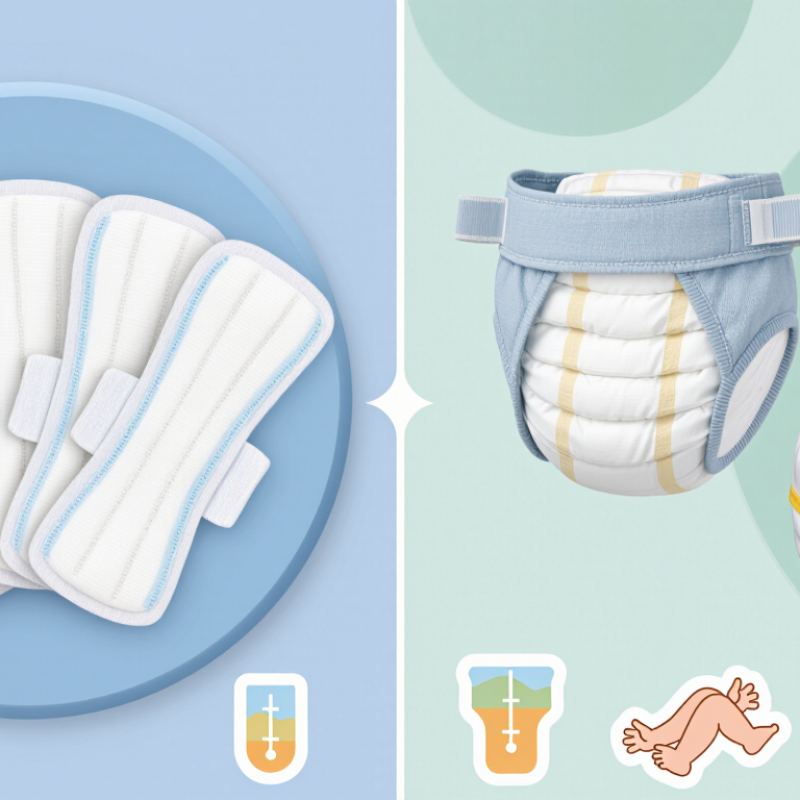
Pads and diapers are absorbent products, but their designs serve different daily needs. A pad is usually a narrow, shaped layer placed inside underwear. It catches menstrual flow or small amounts of urine. Adhesive strips may help it stay in place during walking, sitting, or light exercise. Pads are generally changed several times a day, depending on moisture, flow, and personal comfort.

Diapers surround more of the body and usually include leg gathers, elastic edges, and adjustable fasteners. They are designed to manage larger amounts of urine and, in some cases, stool. Infant diapers support babies who cannot use a toilet independently. Adult diapers can assist people with incontinence, limited mobility, or recovery after medical treatment. A correct size matters because gaps may cause leakage, while excessive tightness can irritate skin.

From practical experience, a pad can feel simpler and less bulky under clothing. However, it may shift during sleep or heavier movement. A diaper offers broader coverage, yet it can feel warm if worn too long. Clean, dry skin remains important with either product. Change timing should reflect the product’s condition, not only a fixed schedule. Some advice online treats pads and diapers as interchangeable. They are not. The boundary can look less clear with heavy incontinence, and choosing well may require guidance from a qualified healthcare professional.

How Pads and Diapers Differ in Design and Absorbency

Pads and diapers differ most in structure and absorbency. A pad is a thin, external product with an absorbent core, a moisture barrier, and adhesive backing. It manages a limited flow across a broad surface. A diaper surrounds the body and uses elastic leg cuffs, waist panels, and a three-dimensional core. These features help contain larger, faster releases.

Testing also shows why capacity claims need caution. ISO 11948-1 measures total absorbency by weighing liquid retained by a product. EDANA’s absorbent hygiene test methods add practical measures, including rewet and leakage under pressure. A diaper may hold substantially more liquid than a pad, but real performance changes with movement, fit, fluid speed, and body position. The 2024 Euromonitor International tissue and hygiene analysis also identifies product performance and comfort as major purchase factors, not capacity alone. That seems obvious, yet product comparisons often miss it.

Tips: Choose a pad for lighter, surface-level flow and frequent changes. Choose a diaper when containment, overnight protection, or mobility matters. Check waist and leg fit carefully; gaps invite leakage. A simple test with water can mislead because menstrual fluid and urine differ in thickness. I have found that “maximum absorbency” is not a complete answer. It measures a laboratory result, not every person’s experience. Consider comfort, skin dryness, odor control, and ease of changing too.

Common Uses for Menstrual Pads and Diapers

What Is the Difference Between Pads and Diapers?

Common Uses for Menstrual Pads and Diapers

Menstrual pads are external absorbent products designed to collect menstrual blood. They usually have an adhesive strip that helps them stay inside underwear. Some are thin for lighter days, while others are wider or longer for overnight protection. They may also help manage light postpartum bleeding, but medical guidance is useful after childbirth. Fit matters.

Diapers serve a different purpose. They are designed mainly to absorb urine and contain stool, making them common for babies and toddlers. Adult diapers can support people with significant bladder or bowel leakage. Their shape, elastic edges, and higher absorbency help reduce leaks during movement or sleep. Not the same.

Menstrual pads are not a direct substitute for diapers. A pad may absorb blood, but it cannot reliably contain stool or large amounts of urine. Likewise, a diaper may feel bulky and uncomfortable during menstruation, even though it can absorb fluid. Incontinence pads are another option for urine leakage; they are shaped for underwear and should not be confused with menstrual pads.

Change any absorbent product regularly, especially when it feels wet or full. Clean, dry skin helps reduce irritation. Fragrance-free options may suit sensitive skin, though individual reactions differ. Persistent rash, pain, unusual odor, or unexpectedly heavy bleeding deserves professional medical advice. Personal experience can guide comfort, but it should not replace clinical care.

What Is the Difference Between Pads and Diapers? - Common Uses for Menstrual Pads and Diapers

Comparison Dimension Menstrual Pads Diapers
Primary purpose Designed mainly to absorb menstrual blood and light vaginal discharge. Designed to absorb urine and feces, depending on the type and intended user.
Common users People who menstruate, including teenagers and adults. Babies, young children, some adults with urinary or bowel incontinence, and people needing temporary post-procedure protection.
Body area covered Fits inside underwear and primarily covers the area where menstrual flow exits. Wraps around the waist and legs to cover a larger area and help contain liquid and solid waste.
Typical absorbent design Usually includes an absorbent core, a fluid-permeable top layer, and a moisture-resistant backing. Usually includes an absorbent core, a liquid-permeable inner layer, leak guards, and a moisture-resistant outer layer.
Fastening method Often attaches to underwear with an adhesive strip and may include side wings for additional security. May use adhesive tabs, hook-and-loop fasteners, or a pull-on design with an elastic waistband.
Handling solid waste Not designed to contain feces and may leak or become unsanitary if used for bowel movements. Some types are designed with additional coverage and barriers to help contain bowel movements.
Best-suited fluid Best suited to menstrual flow, which may vary in thickness and contain tissue. Best suited to urine; specialized versions may also be designed for heavier or mixed incontinence.
Fit and mobility Generally low-profile and designed to move with underwear during everyday activities. Provides broader coverage and may be bulkier, especially when designed for overnight use or higher absorbency.
Common menstrual uses Used during light, moderate, or heavy menstrual flow, depending on the product's absorbency and shape. Panty liners are commonly used for very light flow or discharge. Usually not the first choice for menstruation because the larger shape and features are intended for urine or fecal containment.
Common incontinence uses May provide limited protection for very light urine leakage, but regular menstrual pads are not designed to manage larger amounts of urine. Used for urine leakage, overnight protection, bowel incontinence, or full-time care, depending on the design and absorbency.
When to change Change regularly and whenever it feels wet, full, uncomfortable, or begins to leak. Change frequency depends on flow and product absorbency. Change when wet or soiled, after a bowel movement, or according to an individualized care routine to help protect skin and reduce odor.
Skin considerations Prolonged contact with moisture, friction, or fragranced materials may cause irritation for some users. Frequent changes, gentle cleansing, and keeping the skin dry can help reduce irritation and moisture-related skin problems.
Disposal Wrap used pads in tissue or their original wrapper and place them in a waste bin; do not flush them. Roll or fold used diapers, secure them when possible, and place them in an appropriate waste bin; do not flush them.
Key selection factors Consider flow level, length, absorbency, wing design, comfort, activity level, and skin sensitivity. Consider waist and leg fit, absorbency, leakage protection, mobility, user needs, skin condition, and ease of changing.

Note: Product performance varies by design, size, fit, absorbency level, and frequency of changing. Follow the usage instructions provided with the product.

Choosing Between Pads and Diapers for Different Needs

Choosing between pads and diapers depends on the type, amount, and timing of fluid you need to manage.

Pads are usually thinner and attach inside underwear. They suit menstrual flow or occasional light bladder leakage. Diapers provide wider coverage, absorb more liquid, and include barriers around the legs. They may suit babies, overnight use, or moderate to heavy incontinence.

Pads
Pads are usually thinner and attach inside underwear.

Diapers
Diapers provide wider coverage, absorb more liquid, and include barriers around the legs.

For menstrual care, choose a pad based on flow level, length, and comfort.

A longer pad can feel more secure during sleep. For urinary leakage, select an incontinence pad rather than a menstrual pad when possible. These products are shaped for urine and often include stronger absorbent layers.

Diapers are more practical when leakage is frequent, unpredictable, or difficult to control. Caregivers should check the waist and leg fit. Gaps can cause leaks, while tight edges may rub the skin.

Diapers are more practical when leakage is frequent, unpredictable, or difficult to control.

A common mistake is choosing the highest absorbency automatically.

More material does not always mean better comfort. Change any product when it feels wet, heavy, or soiled, and keep the skin clean and dry. Breathable clothing may reduce heat and irritation.

If leakage suddenly increases, causes pain, or comes with blood in the urine, seek medical advice.

The choice can change over time. Track real use for a few days, because assumptions often fail at night.

Health, Comfort, and Disposal Considerations

What Is the Difference Between Pads and Diapers?

Pads and diapers serve different levels of protection. Pads are usually thinner and designed for menstrual flow or light bladder leakage. They attach to underwear and allow easier movement during daily activities. Diapers provide wider coverage and stronger absorption. They are more suitable for heavy urine loss, overnight use, or bowel incontinence. The boundary is not absolute. Body needs can change from one day to the next.

Comfort depends on fit, material, and changing habits. A damp pad or diaper can rub the skin and trap warmth. This may cause redness, itching, or skin breakdown. Change the product promptly after heavy wetting or soiling. Gently clean the skin and pat it dry. Avoid tight clothing around the waist.

Fragrance-free products may help people with sensitive skin, although not everyone reacts the same way. A healthcare professional should assess persistent pain, rash, bleeding, or unusual odor.

Disposal requires care. Do not flush pads or diapers, even when they look small. Wrap used products securely before placing them in a household waste bin. Remove visible stool into the toilet when practical, then wrap the diaper. Local waste rules may differ, especially for care facilities. Sealed bins can reduce odor, but they do not replace frequent emptying. This part is often overlooked. A product that feels comfortable may still create disposal problems if its materials are difficult to manage.

Menu
Quick Contact
close slider


error: Content is protected !!