Top Physiotherapy Electric Machine Supplier in China?

Choosing a top Physiotherapy Electric Machine supplier in China involves more than comparing prices or product photos. Clinics, distributors, and rehabilitation centers need equipment that suits their intended use, comes with clear documentation, and can be supported after delivery. A polished catalog helps, but it cannot answer every practical question.

Look closely at the machine’s functions, controls, accessories, and operating instructions. Ask for product specifications, quality documentation, warranty terms, and details about technical support. A supplier should explain how settings work and what routine checks the equipment requires. Even small details matter: Are cables easy to replace? Are controls clearly labeled? Can the supplier provide consistent answers about delivery and service?

Good communication counts. So does follow-through. If available, review product samples or arrange a demonstration before placing a larger order. You may also want to ask how the supplier manages quality checks and handles service requests. These questions do not guarantee a perfect partnership, but they make comparisons more grounded.

There is no single supplier that fits every buyer. A small clinic may value simple operation and responsive support, while a distributor may need broader product options and dependable lead times. Some information can still be hard to verify remotely, so avoid relying on claims alone. This guide outlines practical ways to assess Chinese suppliers, compare relevant capabilities, and identify questions worth asking before making a decision.

Top Physiotherapy Electric Machine Supplier in China?

What Is a Physiotherapy Electric Machine and How Is It Used?

A physiotherapy electric machine delivers controlled electrical pulses through pads placed on the skin. Common modes include TENS for sensory stimulation and neuromuscular electrical stimulation to activate selected muscles. The device name sounds precise, but its settings are not plug-and-play. Different goals need different assessment.

A clinician may check the treatment area, skin condition, sensation, and medical history before choosing settings. During a session, the patient usually sits or lies comfortably while electrodes are positioned on clean, dry skin. The clinician adjusts intensity gradually and checks comfort. Small details matter.

The World Health Organization’s 2024 rehabilitation fact sheet estimates that 2.4 billion people worldwide live with conditions that may benefit from rehabilitation. This figure signals broad need, not proof that electrical stimulation suits every person. It is one tool within a wider care plan.

Tips: Ask what the machine is intended to do, and tell the clinician if stimulation feels painful, causes unusual discomfort, or irritates the skin. Follow the prescribed settings; don’t copy another person’s routine. A little uncertainty is reasonable: comfort alone does not show whether treatment is effective.

Which Types of Electric Physiotherapy Machines Are Made in China?

Top Physiotherapy Electric Machine Supplier in China?

Which Types of Electric Physiotherapy Machines Are Made in China?

Chinese manufacturers produce several types of electric physiotherapy equipment. Common examples include TENS and EMS units, which deliver controlled electrical pulses through skin electrodes. Clinics may use them as part of pain-management or muscle-stimulation plans. They are not interchangeable, though. Settings and intended uses differ.

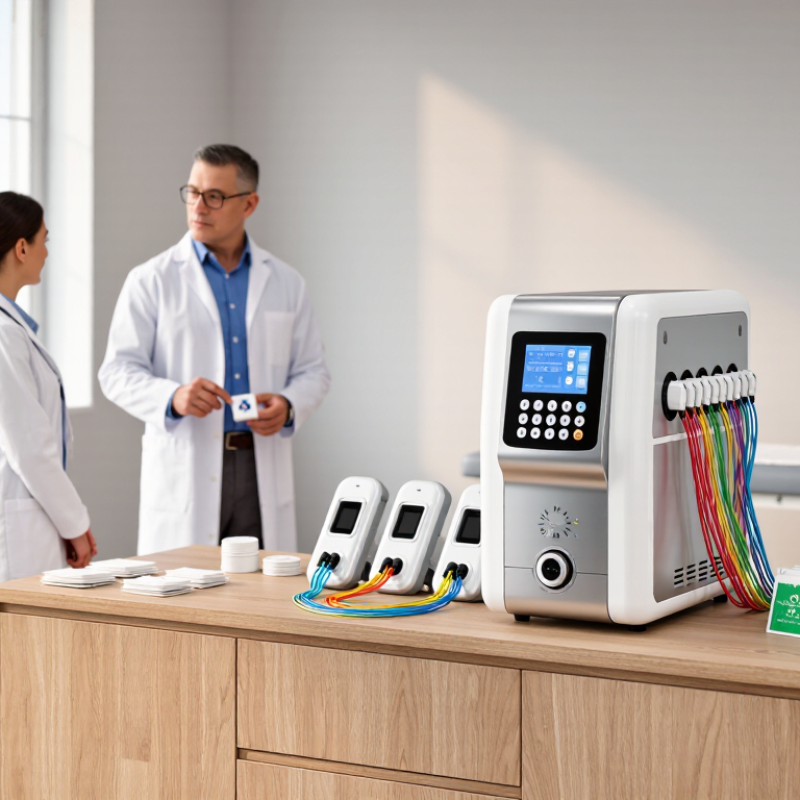
Interferential therapy devices, therapeutic ultrasound machines, and combination units are also widely manufactured. A combination unit may pair electrical stimulation with ultrasound in one console, with cables, electrode pads, and a handheld treatment head. Some factories also make powered traction systems and shockwave equipment. These categories can overlap in supplier catalogs, so product labels alone may not explain how a device is intended to be used.

Details matter. Buyers should check output ranges, treatment modes, safety features, electrode compatibility, and available technical documentation. Ask for clear specifications and instructions, then have a qualified clinician assess whether the equipment suits a particular treatment setting. Interfaces vary. That can complicate training, especially when translated manuals are unclear. A careful review is worthwhile.

What Standards Help Assess a Chinese Supplier’s Quality?

A reliable assessment starts with documents that match the actual machine. Ask whether the supplier’s quality system is certified to ISO 13485, and check the certificate’s scope, issuing body, and expiry date. For electrical physiotherapy equipment, request relevant IEC 60601 test evidence, including electrical safety and electromagnetic compatibility where applicable. The report should identify the model, not just a similar product family. A certificate is not the machine.

Look beyond paperwork. Ask how the supplier controls component changes, inspects incoming parts, and traces each unit by serial number. A useful factory audit follows one device from assembly to final testing: check calibration labels, test records, and how failed units are handled. Risk-management documents aligned with ISO 14971 can show how hazards are identified and reduced. Still, neat files do not prove consistent production. Compare sample results with routine batch records, and ask who performs independent testing. Some answers may be incomplete; that is a reason to investigate, not to assume poor quality. Check whether the supplier can explain its corrective-action process in clear, specific terms.

Top Physiotherapy Electric Machine Supplier in China? — What Standards Help Assess a Chinese Supplier’s Quality?

Use this checklist to compare suppliers of electrical physiotherapy equipment. Confirm that each standard and regulatory requirement applies to the specific device, intended use, target market, and current product configuration.

Assessment Dimension Relevant Standard or Requirement Evidence to Request and Check How It Helps Assess Quality
Quality management system ISO 13485 — Quality management systems for medical devices Current certificate; certification body and accreditation details; certificate scope, site address, and covered activities; audit findings and corrective-action records. Checks whether documented controls cover areas such as design, production, traceability, supplier management, complaints, and corrective actions. Verify that the certified site and scope match the work being purchased.
Risk management ISO 14971 — Application of risk management to medical devices Device-specific risk-management summary; hazard analysis; risk-control measures; residual-risk evaluation; evidence that production and post-market information feed back into risk reviews. Shows whether hazards such as electrical shock, burns, excessive output, incorrect settings, and foreseeable misuse are identified and controlled throughout the device life cycle.
Electrical safety and essential performance IEC 60601-1 — Medical electrical equipment: general requirements for basic safety and essential performance Test report or certificate for the exact model and configuration; laboratory identity and accreditation scope; critical-component list; production inspection and electrical-safety test records. Provides evidence that the equipment has been evaluated for relevant medical electrical safety and essential-performance requirements. Check that accessories, power supplies, and configurations are covered where applicable.
Electromagnetic compatibility IEC 60601-1-2 — Electromagnetic disturbances: requirements and tests EMC test report identifying the model, tested cables and accessories, operating modes, test levels, and pass/fail results; change-control records for components that can affect EMC. Assesses whether electromagnetic emissions and immunity have been evaluated for the intended use environment. A report for a different model or materially different configuration may not be sufficient.
Therapeutic electrical stimulators IEC 60601-2-10 — Particular requirements for the basic safety and essential performance of nerve and muscle stimulators, where applicable Product classification and intended-use statement; applicable test reports; output-characteristic test results; verification of controls, leads, electrodes, and protective features. Provides device-specific assessment for equipment within the standard’s scope, such as applicable nerve or muscle stimulators. Confirm applicability rather than assuming it covers every physiotherapy device.
Software and programmable functions IEC 62304 — Medical device software life-cycle processes, where software is part of the device Software life-cycle documentation; software version and configuration records; verification and validation summaries; anomaly and change-management records; cybersecurity documentation where relevant. Helps determine whether software development, testing, maintenance, and changes are controlled. Applicability depends on the device’s software and regulatory classification.
Usability and use-related safety IEC 62366-1 — Application of usability engineering to medical devices Usability-engineering file or summary; intended-user and use-environment definitions; use-related risk analysis; validation evidence for safety-relevant tasks and controls. Checks whether foreseeable use errors have been considered, including selection of treatment settings, attachment of accessories, and interpretation of warnings and instructions.
Patient-contacting materials ISO 10993 series — Biological evaluation of medical devices, where patient contact applies Material and contact-duration information; biological evaluation plan and report; relevant test reports or scientific rationale; supplier and material-change controls. Assesses whether biological risks have been evaluated for the actual patient-contacting parts, such as electrodes or applicators. The required evaluation depends on the nature and duration of contact.
China market authorization Applicable National Medical Products Administration (NMPA) registration or filing requirements Registration certificate or filing information, as applicable; product name, model, intended use, manufacturer, and approved technical information; check the details against the product offered. Helps verify that the device has the required China-market authorization for its classification and that the offered model and intended use align with the regulatory documents.
Manufacturing authorization and traceability Applicable Chinese medical-device production requirements; requirements depend on device class and the manufacturer’s role Relevant production license or filing records, where required; manufacturing-site details; batch or serial-number traceability; inspection records; complaint, recall, and corrective-action procedures. Helps confirm that the responsible manufacturing site and production controls are identifiable. Check which authorizations apply to the product class and whether the supplier is the manufacturer or an intermediary.
Supplier and production controls ISO 13485 supplier-control provisions and the manufacturer’s documented purchasing and production procedures Approved-supplier controls; incoming-inspection criteria; process-validation records where needed; calibration records; nonconformance and corrective-action samples; change-notification terms. Shows how the organization controls components and processes that can affect safety and performance, and whether changes are reviewed before they reach supplied products.
Document consistency Applicable standards, regulatory documents, labeling, and technical documentation for the device and destination market Compare model numbers, manufacturer and site details, intended use, test samples, certificate scope, labels, instructions for use, and accessories across the submitted documents. Inconsistencies can indicate that evidence does not cover the product being offered. Verify document validity with the issuing body or regulator when practical.

How Can Buyers Compare Chinese Physiotherapy Machine Suppliers?

How Can Buyers Compare Chinese Physiotherapy Machine Suppliers?

Choosing a supplier takes more than comparing prices and product photos. WHO’s 2023 rehabilitation fact sheet estimates that 2.4 billion people worldwide may benefit from rehabilitation. That scale makes dependable equipment and after-sales support important. Ask suppliers for model-specific test records, user manuals, warranty terms, and spare-parts availability. Check that the quoted machine matches the configuration shown in its documents. Small mismatches matter.

Request a live demonstration using realistic settings, such as adjusting treatment intensity and checking displayed readings. Compare equipment specifications, electrical safety documentation, calibration procedures, and staff training. Ask who handles technical questions after delivery, and how quickly common replacement parts can be shipped. Independent test reports are more useful than broad claims about quality. A certificate alone does not prove that every model performs consistently. Buyers should verify its scope and validity.

Tips: Use the same checklist for every supplier. Keep written answers and sample test documents. If something is unclear, ask again; procurement schedules can make buyers accept vague replies. No checklist removes all uncertainty. A trial unit may reveal issues that a video misses.

What Should Buyers Check Before Ordering and After-Sales Support?

Before ordering a physiotherapy electric machine, ask for its intended-use details, operating range, and electrical safety documentation. Request a sample test report, not just a brochure. Check whether the stated output settings match the values shown on the control panel. WHO’s 2023 rehabilitation fact sheet estimates that 2.4 billion people worldwide live with conditions that may benefit from rehabilitation. That scale makes reliable equipment important, but demand alone does not prove a machine suits your clinic. Small details matter. Confirm accessories, plug type, user instructions, packaging, and delivery time in writing. Ask who performs final inspection and how faults are recorded.

After-sales support deserves equal scrutiny. Get warranty terms that name covered parts, labor, shipping, and exclusions. Ask how quickly the supplier responds, whether remote troubleshooting is available, and where replacement parts are stored. A machine can sit idle while one small cable is missing. Request a maintenance schedule and staff training before shipment, then confirm these services are included in the quotation. Keep a record of serial numbers, installation checks, and service contacts. If the supplier cannot explain how a reported fault moves from diagnosis to repair, pause and ask for the process in writing. I would still verify support claims with a reference customer; polished documents can leave practical gaps.

Menu
Quick Contact
close slider


error: Content is protected !!