How to Source Ad Plasma Biomarkers in 2026?
Sourcing Ad Plasma Biomarkers in 2026 requires more than finding a commercial kit. Researchers must connect biological relevance, sample quality, assay performance, and documented provenance. Plasma can appear uniform in a tube, yet its history matters. Collection time, centrifugation delay, freeze-thaw cycles, and storage temperature may influence measured concentrations.
A reliable sourcing strategy begins with a defined research question. Are you evaluating amyloid, phosphorylated tau, neurofilament light, or a broader panel? Each target needs suitable evidence and technical validation. Experienced teams should review peer-reviewed studies, biobank procedures, reference materials, and vendor quality records. They should also confirm consent, data governance, and applicable research regulations. Small details matter, such as using identical tube types and recording the minutes before freezing.
Supplier comparisons should examine analytical sensitivity, specificity, reproducibility, lot consistency, and external validation. Independent testing can reveal differences between advertised performance and real laboratory results. That step may feel slow, but it protects downstream conclusions. No sourcing plan is flawless. Some published evidence remains limited, and emerging assays may change quickly. A transparent decision log can show why one supplier, cohort, or platform was selected. It also makes later review easier.
In 2026, responsible sourcing should support collaboration rather than encourage rushed adoption. Laboratories, clinicians, biobanks, and statisticians need shared expectations before samples arrive. The strongest approach combines current evidence with practical caution. Ad Plasma Biomarkers may improve research workflows, but only when their limitations remain visible.
Define the Purpose and Scope of Alzheimer’s Plasma Biomarker Sourcing
How to Source AD Plasma Biomarkers in 2026?
Define the Purpose and Scope of Alzheimer’s Plasma Biomarker Sourcing
Alzheimer’s plasma biomarker sourcing should begin with a precise clinical purpose. Are you screening risk, supporting diagnosis, tracking progression, or monitoring treatment response? Each purpose requires different evidence, sampling intervals, and performance thresholds. A research assay may support discovery but remain unsuitable for clinical decisions. That distinction must stay visible.
Our team would define the target population before contacting suppliers. Include age range, cognitive status, disease stage, medications, and relevant health conditions. Specify the required biomarkers, sample volume, plasma type, collection tubes, storage temperature, and freeze-thaw limits. Record these details in a sourcing brief. Small omissions can distort comparisons across sites. They often do.
Scope also includes evidence quality. Request analytical validation, sample provenance, handling records, and documentation for potential confounders. Check whether the cohort reflects the intended population, rather than an unusually selected group. Review missing data and exclusion criteria carefully. Clean datasets can still hide weak assumptions.
A practical sourcing plan should define acceptance criteria before samples arrive. Set minimum volume, allowable hemolysis, collection windows, and metadata requirements. Protect participant privacy through lawful governance and controlled access. Avoid promising clinical utility before independent validation. Our first draft may still be too broad. That is useful. Revising it exposes what the project truly needs.
Set Eligibility, Consent, and Sample Metadata Requirements
Sourcing AD plasma biomarkers in 2026 starts with eligibility, consent, and metadata. The 2024 Alzheimer’s Disease Facts and Figures report estimates 6.9 million Americans aged 65 and older live with Alzheimer’s disease. Your cohort should reflect that diversity, not only convenient volunteers. Define age ranges, cognitive status, disease stage, medication use, major comorbidities, and recent infections. Record exclusions clearly. Ambiguous criteria weaken reproducibility.
Consent must explain future biomarker testing, data sharing, recontact, withdrawal limits, and incidental findings. Participants should understand that plasma results may not provide a diagnosis. The WHO’s Global Status Report on the Public Health Response to Dementia identifies dementia as a major global health priority, supporting broader and more representative recruitment. Still, one consent template cannot fit every language or culture. That deserves review.
Tips:
Capture collection time, fasting status, posture, tube type, processing delay, centrifugation settings, storage temperature, freeze-thaw cycles, and assay platform. Use barcode-linked records, with access controls and audit trails. Predefine acceptable deviations. For example, a 90-minute processing delay may affect protein stability, but its impact can vary by analyte. I would not treat one cutoff as universal. The NIA-AA Research Framework supports biological classification, yet clinical context remains essential. Missing metadata is not a minor inconvenience. It can quietly distort every downstream result.
Select Qualified Biobanks, Clinics, and Research Partners
Sourcing Alzheimer’s disease plasma biomarkers in 2026 requires more than finding available samples. Partner selection determines whether results are reproducible. Start with biobanks holding well-documented donor histories, longitudinal records, and controlled processing logs. Confirm collection tubes, centrifugation timing, freeze-thaw cycles, storage temperature, and aliquot volumes. Small differences can distort protein measurements.
The Alzheimer’s Association’s 2025 Facts and Figures report estimates that 7.2 million Americans aged 65 and older live with Alzheimer’s disease. That scale increases demand for reliable, diverse cohorts. Clinics should demonstrate consistent cognitive assessments and clearly defined diagnostic pathways. Research partners should provide assay validation, blinded sample handling, and transparent missing-data policies. The 2024 revised diagnostic criteria also emphasize biomarker-defined disease biology, not symptoms alone. Clinical context still matters.
Tips: Request a sample-level data dictionary before contracting. Inspect de-identification procedures, consent language, and withdrawal policies. Ask for quality-control statistics, not broad assurances. Compare pre-analytical variables across sites. A beautiful cohort may still contain hidden selection bias. I would also challenge “clinically confirmed” labels unless the confirmation method is documented. Independent pathology, imaging, or fluid evidence can strengthen classification, but none removes every uncertainty. Build an audit trail from collection to analysis, and predefine exclusion rules before viewing outcomes. According to the World Health Organization’s dementia reporting, research capacity remains uneven across regions; geographic diversity therefore needs deliberate planning, not optimistic assumptions.
Verify Plasma Collection, Processing, Storage, and Chain of Custody
How to Source AD Plasma Biomarkers in 2026?
Reliable plasma biomarker sourcing begins before the blood draw. Confirm participant identity, collection time, fasting status, and the exact tube type. EDTA plasma is commonly used, but the protocol must define acceptable alternatives. Record every action electronically or on controlled paper forms. Small omissions can weaken an otherwise strong study.
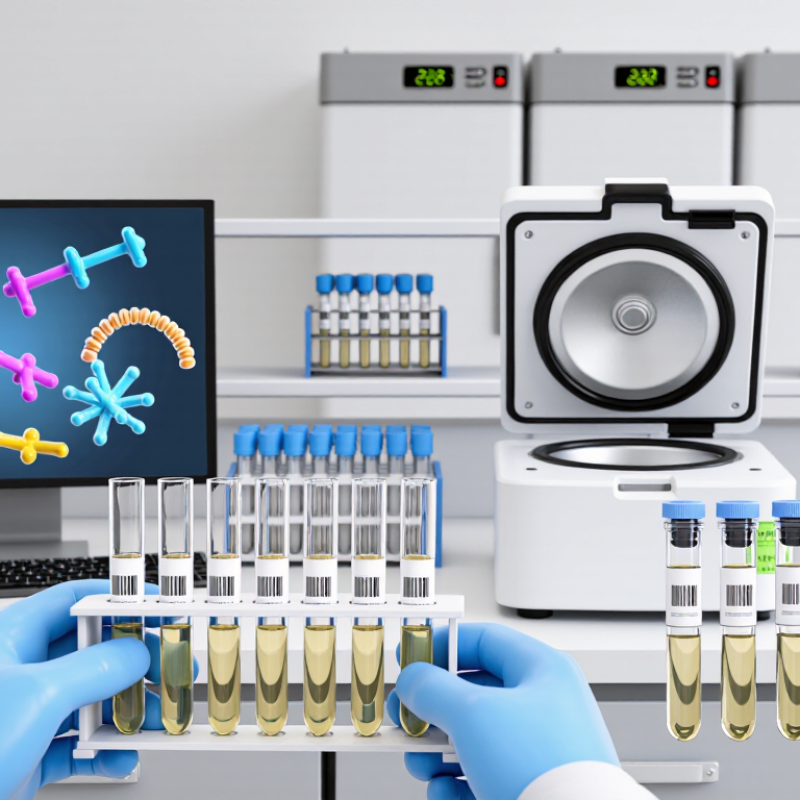
Processing time matters. Keep samples cool, but avoid uncontrolled temperature changes. Document the interval from collection to centrifugation, including delays caused by transport or staffing. Use validated centrifuge settings and transfer plasma without disturbing the cellular layer. Inspect each aliquot for hemolysis, then record the finding rather than quietly excluding it. Imperfect samples still hold useful information.
Store aliquots in clearly labeled, low-binding tubes at validated ultra-low temperatures. Use several small aliquots to limit freeze-thaw cycles. Each movement needs a timestamp, handler identification, location, and reason. During shipment, monitor temperature continuously and review the data on arrival. A missing seal or unexplained temperature excursion should trigger an investigation, not a convenient assumption. Chain of custody is more than a signature; it connects the participant, specimen, freezer, and final analysis. Review the process regularly, because a protocol that looks complete on paper may fail during a busy collection day.
How to Source AD Plasma Biomarkers in 2026?
Verify Plasma Collection, Processing, Storage, and Chain of Custody
The chart shows protocol acceptance targets for sourcing AD plasma biomarkers. Collection identity, timestamps, processing records, storage location, temperature review, and every custody transfer should be documented for 100% of specimens. Actual separation windows, anticoagulant choice, storage temperature, and freeze-thaw limits must be validated for the specific biomarker assay and controlled by the study SOP.
These are quality-control targets rather than observed industry averages and are consistent with common biobank and pre-analytical quality principles.
Assess Assay Quality, Regulatory Fit, and 2026 Data Standards
How to Source AD Plasma Biomarkers in 2026?
Sourcing AD plasma biomarkers requires more than comparing sensitivity claims. Start with the intended use. A discovery study, a trial endpoint, and a clinical decision need different evidence.
Ask for precision data across realistic concentration ranges. Review accuracy, calibration, lower limits of quantification, matrix effects, and interference testing. Examine hemolysis and repeated freeze-thaw results. Small details matter. A clean report may still hide unstable sample handling.
In practice, I would request the full preanalytical protocol, including collection tubes, processing time, storage temperature, and shipment conditions. Confirm whether the assay has been tested in diverse cohorts, not only ideal samples. Orthogonal confirmation can strengthen confidence, but it also adds cost and delay.
Regulatory fit depends on the claim, setting, and jurisdiction. Separate research-use evidence from evidence supporting clinical interpretation. Document intended use, risk controls, informed consent, privacy safeguards, and change management. Do not treat regulatory language as decoration.
For 2026 data standards, require machine-readable metadata, controlled units, sample identifiers, missingness codes, assay versioning, and audit trails. Link every result to quality-control status and the relevant batch. Predefine outlier rules and statistical analysis plans before reviewing outcomes.
The weak point is often interoperability. Different laboratories may report the same marker with different calibrators or units. Harmonization remains imperfect. That deserves explicit disclosure, not a confident footnote. Reliable sourcing means preserving uncertainty while making every decision traceable.
How to Source AD Plasma Biomarkers in 2026? — Assess Assay Quality, Regulatory Fit, and 2026 Data Standards
Practical sourcing framework for Alzheimer’s disease plasma biomarker programs, covering analytical performance, clinical interpretation, regulatory readiness, and interoperable data requirements.
| Biomarker | Primary Development Use | Preferred Specimen and Handling | Assay and Measurement Considerations | Minimum Quality Evidence to Request | Regulatory and Clinical Fit | 2026 Data-Standard Requirements | Sourcing Priority |
|---|---|---|---|---|---|---|---|
| Plasma p-tau217 Phosphorylated tau AT(N) | Detection of Alzheimer’s pathology; enrichment for amyloid-positive participants; pharmacodynamic monitoring in selected studies. | EDTA plasma is commonly used. Document collection tube, processing delay, centrifugation conditions, aliquot volume, freeze–thaw count, and storage temperature. | Ultra-sensitive immunoassay or high-sensitivity mass-spectrometry method. Results may be reported in pg/mL, but values are platform-dependent and should not be compared without harmonization. | Require precision near the clinical decision range, dilutional linearity, spike recovery, selectivity, lot-to-lot monitoring, interference testing, and stability after realistic handling excursions. | Strong candidate for regulated biomarker development, but intended-use claims must be defined separately for diagnosis, enrichment, prognosis, or treatment monitoring. Clinical cut-offs require population-specific validation. | Capture analyte definition, phosphorylation-site designation, calibrator traceability, assay version, units, lower limit of quantification, run date, and specimen-processing timestamps. | High priority |
| Plasma p-tau181 Phosphorylated tau AT(N) | Supportive evidence of Alzheimer’s pathology; cohort characterization; longitudinal observational studies and exploratory treatment-response analyses. | Plasma or serum may be used depending on the validated method. Matrix type must remain consistent within an analysis set because concentrations can differ between matrices. | Immunoassay and mass-spectrometry methods are available. Assay epitope, antibody pair, calibrator system, and reporting units materially affect comparability. | Request analytical sensitivity, repeatability, intermediate precision, between-run precision, carryover, matrix-effect, hemolysis, lipemia, and icterus studies. | Appropriate as a supportive biomarker or enrichment measure when the method and intended use are prospectively specified. Avoid treating a single threshold as universally transferable. | Store raw value, transformed value if used, reference interval or decision rule, assay platform class, quality-control results, and reason for any result exclusion. | High priority |
| Plasma Aβ42/Aβ40 ratio Amyloid AT(N) | Estimation of brain amyloid pathology; screening or enrichment before confirmatory amyloid imaging or cerebrospinal-fluid assessment. | EDTA plasma is frequently used, with strict control of adsorption, platelet contamination, processing time, storage duration, and freeze–thaw exposure. | Immunoprecipitation–mass spectrometry and high-sensitivity immunoassays can quantify Aβ isoforms. The ratio is sensitive to measurement error in both numerator and denominator. | Require separate validation of Aβ42 and Aβ40, ratio precision, analytical measurement range, recovery, dilution behavior, interference, sample stability, and concordance against an accepted amyloid reference method. | Suitable for pathology assessment or trial enrichment only when the intended population, comparator method, and decision threshold are validated. A ratio is not interchangeable with an absolute Aβ concentration. | Retain numerator, denominator, calculated ratio, calculation algorithm, missing-value rules, unit conventions, censoring flags, and reference-method results where available. | High priority |
| Plasma neurofilament light (NfL) Neurodegeneration N domain | General neuronal injury and disease-progression monitoring; useful for safety and exploratory pharmacodynamic assessment, but not specific to Alzheimer’s disease. | Plasma or serum can be measured. Record age, renal function, body mass, neurological comorbidities, recent injury, and inflammatory conditions because these may influence concentration. | High-sensitivity immunoassay is commonly used. Results are typically right-skewed and may require log transformation for statistical modeling. | Require age-stratified reference data, analytical precision, biological-variation estimates, reference-change calculations where relevant, and evidence that sample handling does not introduce material bias. | Strong fit for monitoring neuronal injury or progression, but weak as a stand-alone Alzheimer’s-specific diagnostic marker. Interpretation should account for non-AD causes of elevation. | Include age at sampling, renal-function variables when available, neurological events, assay units, transformation status, batch identifiers, and longitudinal sampling intervals. | Medium priority |
| Plasma GFAP Astroglial activation N domain | Supportive evidence of astrocytic response and neurodegenerative disease biology; participant stratification and exploratory disease-monitoring applications. | Plasma is commonly used. Document age, renal status, acute neurological events, and specimen handling because biological and preanalytical effects may be substantial. | High-sensitivity immunoassay or equivalent validated method. Method-specific reference ranges and decision limits are required. | Request precision across the measuring range, analytical specificity, interference studies, reference-population characteristics, stability data, and performance across relevant disease controls. | Potentially useful as a complementary marker, but it is not specific to Alzheimer’s disease and should not independently establish amyloid or tau pathology. | Preserve clinical context, reference-population definition, assay lot, instrument or method class, units, sample age, and any algorithm combining GFAP with other biomarkers. | Medium priority |
| Plasma total tau Tau Exploratory | Exploratory assessment of neuronal injury and tau-related biology; generally less disease-specific than phosphorylated tau measures. | Plasma or serum may be used according to the validated method. Preanalytical variation and low circulating concentrations require careful specimen control. | High-sensitivity immunoassay or mass spectrometry. Total tau assays may recognize multiple tau species and therefore require clear epitope and analyte definitions. | Require analyte characterization, specificity for intended tau species, lower-limit performance, precision near expected concentrations, dilution linearity, and evidence of low-background reliability. | Usually exploratory or supportive. Not recommended as a stand-alone Alzheimer’s-specific classification marker without strong clinical-validation evidence. | Define molecular target, epitope region, assay calibration, units, below-quantification handling, replicate policy, and whether values were used for clinical or exploratory analysis. | Conditional |
| Composite plasma biomarker score Multianalyte Algorithm | Integrated classification or enrichment using combinations such as p-tau, amyloid ratio, age, and other clinical covariates. | Requires harmonized specimen types, synchronized metadata, consistent preanalytical procedures, and predefined rules for missing or failed measurements. | May combine immunoassay or mass-spectrometry outputs with statistical or machine-learning models. Model performance is dependent on assay version and target population. | Require locked algorithm, prespecified cut-offs, calibration assessment, internal and external validation, subgroup performance, repeatability, missing-data analysis, and protection against data leakage. | Potentially suitable for clinical decision support or enrichment, but regulatory suitability depends on intended use, clinical benefit, validation design, and change-control procedures. | Store all component values, model version, feature transformations, training-data provenance, decision threshold, confidence or indeterminate zone, and audit trail for model changes. | Conditional |
| Quality-control and preanalytical metadata Required layer Data integrity | Verification that biomarker results are interpretable, reproducible, and suitable for cross-site or longitudinal comparison. | Record collection date and time, fasting status where relevant, tube type, processing delay, centrifugation protocol, aliquot history, storage temperature, freeze–thaw count, and deviations. | Include internal QC levels, calibration status, reagent or lot identifiers, instrument status, run acceptance rules, duplicate or replicate policy, and operator or laboratory identifiers using coded values. | Use documented SOPs, predefined acceptance criteria, proficiency or external-quality assessment where available, deviation management, corrective actions, and version-controlled assay documentation. | Supports GCP-compliant trial conduct, data integrity, inspection readiness, and defensible interpretation. Analytical validity and clinical validity remain separate evidence requirements. | Use standardized controlled terminology, ISO 8601 timestamps, persistent sample identifiers, provenance links, machine-readable units, explicit missingness codes, and immutable audit records. | Mandatory |