

2026 How to Choose the Right Surgical Implants for Your Needs?

Choosing the right surgical implants is crucial for successful outcomes. Surgical implants play a vital role in various medical procedures. They can enhance quality of life and restore function. However, selecting the most suitable option is not always straightforward.

Factors to consider include the type of surgery, individual health conditions, and specific needs. Not all implants are created equal. Some materials may pose risks of allergies or complications. It's essential to consult healthcare professionals who specialize in surgical implants. Their expertise can guide you in making an informed choice.

Your personal preferences also matter. Have conversations with experts about your concerns. Understand the pros and cons of different options. Personal reflection on past experiences can help, too. In the end, the right surgical implant can significantly impact recovery and well-being. Make your decision wisely.

2026 How to Choose the Right Surgical Implants for Your Needs?

Understanding the Types of Surgical Implants Available Today

2026 How to Choose the Right Surgical Implants for Your Needs?

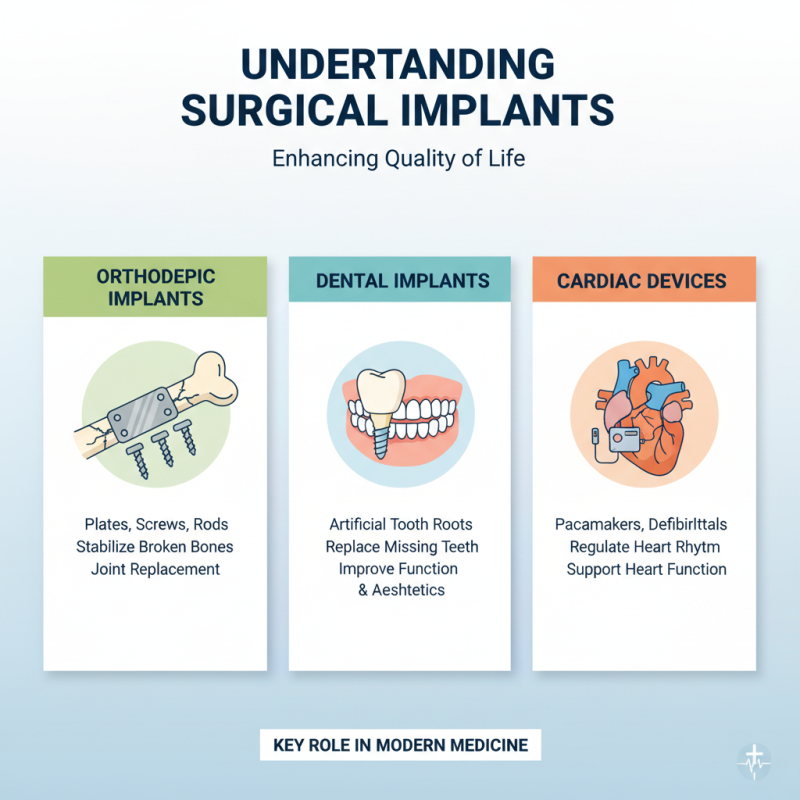
Surgical implants play a vital role in modern medicine, enhancing quality of life for many patients. These implants come in various types, each designed for specific medical needs. Common categories include orthopedic implants, dental implants, and cardiac devices. Orthopedic implants, such as plates and screws, help stabilize broken bones. Dental implants serve as artificial roots for missing teeth, improving both function and aesthetics.

Each type of implant has its own materials and designs. For instance, titanium is commonly used for its strength and biocompatibility. However, not all patients may be suitable for every implant type. Some may experience complications or rejection of the material. Individual health conditions and lifestyle choices greatly influence the suitability of implants. It's crucial to have open discussions with healthcare providers about these factors.

Choosing the right implant is a collaborative process. Patients should ask questions and express concerns to their surgeons. Understanding the purpose, longevity, and potential risks associated with each implant is essential. Every option has unique benefits and drawbacks. Awareness of these details contributes to making informed decisions, ensuring the best possible outcomes.


Evaluating Your Medical Needs and Personal Health Factors

When considering surgical implants, evaluating your medical needs and personal health factors is crucial. According to the American Society of Plastic Surgeons, understanding your overall health can significantly influence the choice of implants. Conditions such as diabetes or cardiovascular issues can complicate surgeries and affect recovery.

Assessing your body type is another vital component. For instance, a report from the American Academy of Orthopaedic Surgeons highlights that certain implants may be more suitable for different body shapes. Specialized imaging techniques can provide insights into the best fit for your anatomy. Discussing these details with your healthcare provider ensures a tailored approach.

Tips: Always ask about the materials used in the implants. Higher quality and biocompatible materials reduce complications. Also, reflect on your lifestyle. For instance, active individuals may require more durable, high-strength implants. Understanding these nuances can optimize your surgical outcome and longevity of the implants.

Consulting with Healthcare Professionals for Expert Advice

Choosing the right surgical implant is crucial for successful outcomes. Consulting with healthcare professionals is essential. They bring expertise to the complex decision-making process. According to a 2022 report from the American Journal of Surgery, 60% of patients reported dissatisfaction due to lack of information. Understanding your needs requires professional guidance.

Expert advice can clarify options. Engage with surgeons to discuss materials, risks, and benefits. A doctor can provide insight into the long-term performance of implants. Don't hesitate to ask questions. Make sure you understand the implications of your choices. Every patient's situation is unique. A tailored approach leads to better results.

Tips: Always get a second opinion. It’s okay to be uncertain. Exploring multiple perspectives can help. Consider asking about patient testimonials. Real experiences often illuminate the unknown. Remember, the goal is to find what best suits you. Your health is not a one-size-fits-all scenario.

Assessing Risks and Benefits of Different Implant Options

Choosing the right surgical implant requires careful consideration of risks and benefits. Understanding the different options available is crucial for making an informed decision. Data from a recent industry report indicates that about 25% of patients experience complications with their implants. These range from mild discomfort to severe infections. Evaluating these risks can help you choose a safer option.

Many implants are designed with various materials, impacting their longevity and biocompatibility. For instance, a study revealed that titanium implants have a 95% success rate over ten years. However, not all implants are suitable for every patient. Individual health conditions, such as allergies or previous surgeries, can influence outcomes. Therefore, personalized assessments are crucial for minimizing complications.

Tips: Consult with a qualified surgeon about your specific needs. Inquire about their experiences with various implant types. Ask for statistics on complication rates. Consider your lifestyle and activity level when selecting an implant. The right choice involves weighing potential advantages against risks, considering both short-term and long-term effects. Enduring discomfort or complications may lead to regrets in the future. Always prioritize informed choices over popularity.

Post-Operative Care for Optimal Recovery and Implant Success

Post-operative care plays a critical role in the success of surgical implants. Research indicates that up to 30% of implant failures can be attributed to inadequate aftercare. This highlights the importance of adhering to your surgeon's guidelines. Effective post-operative care improves recovery and reduces complications.

A key aspect of post-operative care is pain management. Controlling pain ensures a smoother recovery journey. Patients should follow prescribed medication schedules closely. Proper hydration and nutrition also significantly impact healing. Studies show that patients who maintain a balanced diet post-surgery experience 25% faster recovery rates.

**Tips:** Always keep your surgical site clean. Monitor for signs of infection, such as redness or swelling. Engage in light physical activity, if advised, as it promotes blood circulation and healing.

It's crucial to maintain follow-up appointments, even when feeling well. Some complications may not present immediate symptoms. Additionally, be open to discussing any concerns with your healthcare provider. This transparent communication fosters trust and ensures better outcomes.

Menu
Quick Contact
close slider


error: Content is protected !!