

How to Choose Clear Self Ligating Braces in 2026?

Choosing Clear Self Ligating Braces in 2026 requires more than comparing transparent brackets in a product catalog. The right system should match the patient’s bite, enamel condition, treatment goals, and orthodontist’s clinical experience. Orthodontist Dr. Robert Boyd has expressed a useful patient-centered principle: “The best appliance is the one that fits the patient’s needs.” That idea remains important when evaluating modern clear systems.

A reliable review should examine bracket transparency, clip durability, torque control, archwire compatibility, and resistance to staining from coffee or curry. It should also consider how easily the orthodontist can place, adjust, and repair each bracket. A clear bracket may look attractive under bright clinic lights, yet appear less discreet after months of daily wear. Small details matter. Ask about ceramic composition, rounded edges, replacement procedures, and cleaning instructions. Clinical evidence and transparent manufacturer information deserve more weight than polished advertising.

The choice is not perfect.

Some systems promise shorter appointments or gentler movement, but outcomes depend heavily on diagnosis, biomechanics, hygiene, and patient cooperation. I may be tempted to focus on appearance first. That would be a mistake. A practical decision should balance aesthetics, mechanical performance, treatment planning, cost, and long-term stability. Patients should discuss these factors with a licensed orthodontist before selecting Clear Self Ligating Braces. This guide will help readers compare the important features, identify weak claims, and ask sharper questions during consultation.
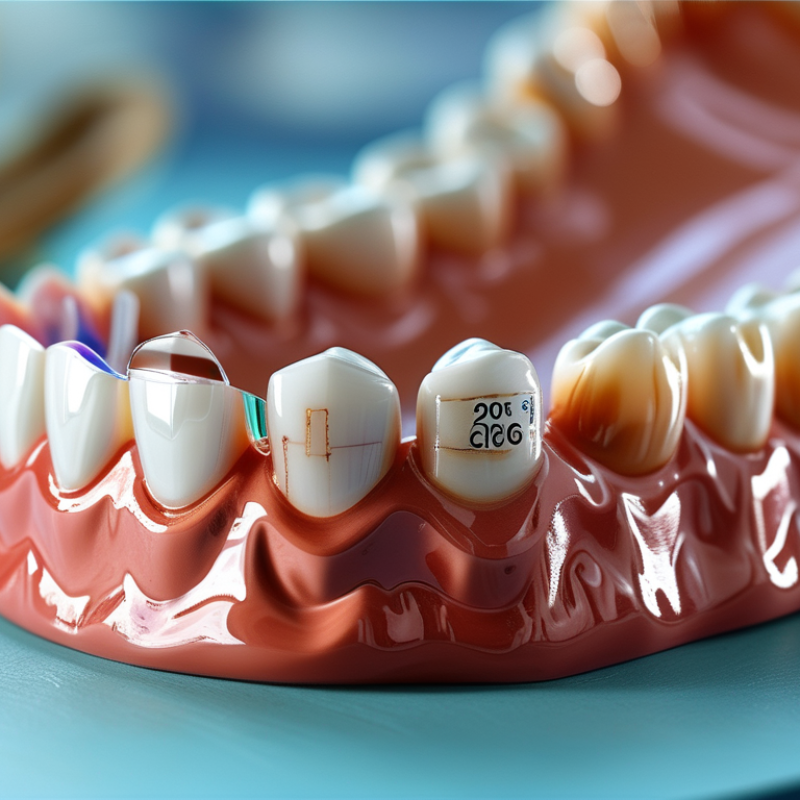
How to Choose Clear Self Ligating Braces in 2026?

Define Clear Self-Ligating Braces Using ISO 27020:2024 Quality Criteria

How to Choose Clear Self-Ligating Braces in 2026?

Define Clear Self-Ligating Braces Using ISO 27020:2024 Quality Criteria

Clear self-ligating braces combine a tooth-colored bracket body with an integrated closing clip. ISO 27020:2024 provides requirements and test methods for orthodontic brackets and tubes. It does not define “clear” as a clinical category. It also does not promise faster treatment. Therefore, selection should begin with verified slot dimensions, base geometry, surface finish, clip function, and material documentation.

A practical inspection starts under bright chairside light. Look for smooth ceramic edges and a clip that opens without scratching the slot. Check whether the bracket base matches the tooth surface closely. Poor adaptation can increase adhesive thickness and complicate removal. Ask for test evidence on dimensional accuracy, bond strength, corrosion resistance, and repeated clip cycling. Marketing photographs are not quality data.

The WHO Global Oral Health Status Report 2022 estimates that oral diseases affect nearly 3.5 billion people worldwide. That scale supports careful, evidence-based procurement, not rushed product choices. A Cochrane review found limited evidence that self-ligating systems substantially shorten treatment time compared with conventional brackets. This matters. A clear appearance may improve acceptance, but it cannot replace clinician control, hygiene guidance, or reliable manufacturing records. My checklist still has gaps: ISO conformity alone cannot predict every patient’s staining, breakage, or removal experience.

Compare Friction and Treatment-Time Evidence from Systematic Reviews

How to Choose Clear Self Ligating Braces in 2026?

Clear self-ligating braces use clips instead of elastic ligatures. Their appearance can be appealing, especially on close-up photographs. Yet appearance does not prove faster treatment. A Cochrane review of self-ligating versus conventional brackets found no clinically meaningful reduction in total treatment time. The evidence quality was low to moderate, with small studies and inconsistent methods. That matters when a clinic promises dramatic speed.

Friction deserves careful interpretation. Laboratory testing often shows lower resistance with self-ligating designs, but mouth conditions are different. Saliva, tooth angulation, wire size, and chewing forces can change the result. A systematic review in the European Journal of Orthodontics reported that friction differences did not consistently produce better clinical outcomes. Some meta-analyses found treatment savings near two months, but the variation between studies was substantial. Two months is not guaranteed.

Ask for the actual evidence.

In my clinical reading, tooth movement control matters more than a single friction number. Request the planned treatment duration, appointment frequency, extraction assumptions, and evidence for similar cases. The American Association of Orthodontists also emphasizes individualized diagnosis rather than appliance selection alone. A clear bracket may stain less than expected, or more than expected, depending on diet and hygiene. That part is often underexplained. Choose transparent communication, documented follow-up, and a qualified orthodontic assessment over a fast-sounding claim.

Check Ceramic Bracket Strength, Transparency, and Stain-Resistance Data

How to Choose Clear Self Ligating Braces in 2026?

Clear self-ligating braces should be judged by evidence, not appearance alone. Ask for ceramic bracket strength data from standardized laboratory testing. Useful figures include fracture load, slot deformation, and clip durability after repeated opening cycles. A strong bracket should resist chewing forces without sharp edges or unexpected breakage. Still, laboratory strength does not perfectly predict every patient’s bite.

Transparency needs more than the word “clear.” Request light-transmittance and haze measurements, preferably before and after simulated aging. Lower haze usually means a cleaner, glass-like appearance. Compare the bracket, clip, and adhesive together. One highly transparent part cannot hide a cloudy component. Small details matter.

Stain resistance deserves practical testing. Ask whether samples were exposed to coffee, tea, curry, red sauce, and tobacco-free staining solutions. Look for color-change data, such as ΔE values, after repeated exposure. Lower color change is generally preferable, but lighting can alter visual judgments.

A polished surface may still discolor around the adhesive margin. Not perfect. An orthodontist should also check enamel condition, bite pressure, and cleaning habits before recommending a system.

The clearest option may not be the safest choice for every mouth. Evidence should guide the decision, while clinical judgment fills the gaps.

Assess Torque Control, Slot Accuracy, and Manufacturer Tolerances

When choosing clear self-ligating braces in 2026, examine torque control beyond the product brochure. Torque depends on slot geometry, archwire fit, clip pressure, and bracket positioning. A nominal 0.022-inch slot may not measure exactly 0.022 inches. Independent dimensional studies have reported measurable slot enlargement and variation between batches (Cash et al., 2004; Major et al., 1994). Small errors can increase play between the wire and slot. That may soften torque expression, especially during finishing.

Ask for laboratory data, not only marketing claims. ISO 27020:2019 defines requirements for orthodontic brackets and tubes, including dimensional and mechanical testing. However, compliance does not guarantee identical clinical behavior. Request the manufacturer’s mean slot dimensions, tolerance range, torque-angle testing, and batch quality records. Look for testing with rectangular wires, because round-wire friction tests reveal little about torque accuracy. A useful report should state sample size, measuring equipment, and failure limits.

Check the edges under magnification. Poorly finished ceramic surfaces may create uneven wire contact or clip movement. Clinical reviews also show that bracket placement errors can exceed the effect of small design differences. I would not trust a tight clip alone. A bracket can feel secure yet express limited torque. Compare independent test results with the manufacturer’s tolerances, then discuss wire sequence and finishing needs with an orthodontist.

The uncomfortable question remains: are published laboratory results transferable to saliva, temperature changes, and real chewing forces? Often, not completely.

Verify Clinical Safety, FDA/CE Status, Warranty, and Cost per Treatment

How to Choose Clear Self-Ligating Braces in 2026?

Clinical safety should come before appearance. Check the device’s intended use, material information, cleaning instructions, and adverse-event history. The U.S. FDA’s 510(k) database can confirm whether a product has the required market clearance. In Europe, verify a valid CE marking under Regulation (EU) 2017/745, supported by a Declaration of Conformity. A logo alone proves little. Ask the orthodontist to inspect the bracket edges, clip movement, and fit before bonding.

Clinical evidence also needs careful reading. A Cochrane review of self-ligating orthodontic appliances found no convincing, clinically important reduction in treatment time compared with conventional appliances. That finding may disappoint buyers. It also prevents exaggerated promises. Treatment results depend on diagnosis, biomechanics, hygiene, and appointment quality. Published evidence is not perfect, either.

Warranty terms deserve the same attention as clinical claims. Confirm coverage for clip failure, detachment, replacement parts, and manufacturing defects. Ask whether labor, shipping, and refinements are excluded. Calculate the full cost per treatment, including scans, consultations, emergency visits, retainers, and taxes. A lower package price may become expensive after these additions. Request a written quote with treatment duration and payment stages. Keep the documents. Small details matter.

Menu
Quick Contact
close slider


error: Content is protected !!