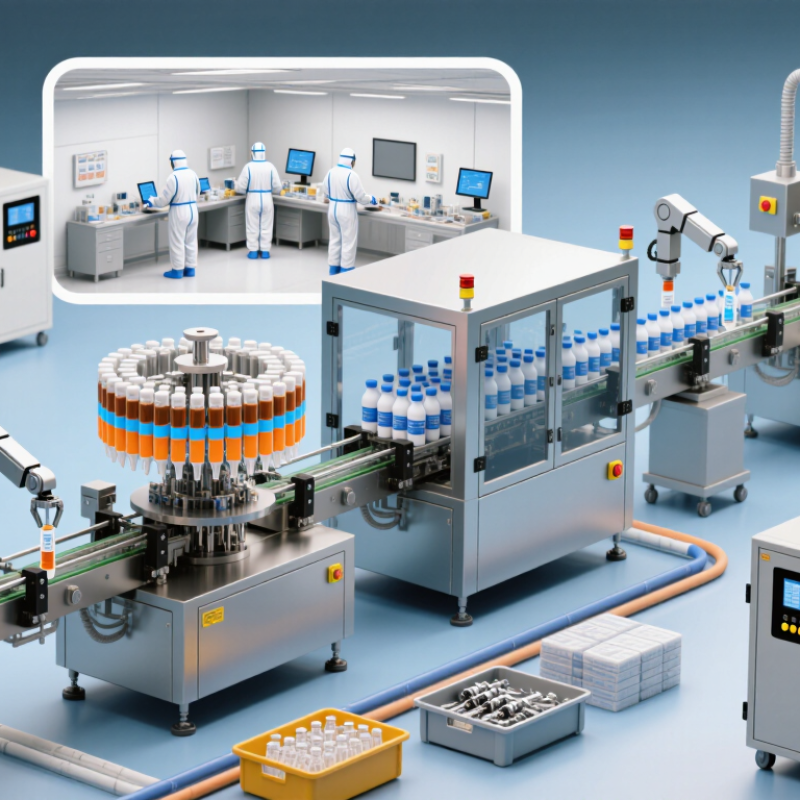
2026 Top Pharma Filling Machine Types for Global Buyers?

Choosing a Pharma Filling Machine in 2026 requires more than comparing speed, price, and catalog photos. Global buyers must assess product viscosity, container format, fill volume, sterility requirements, and future production plans. A compact vial line may suit clinical batches, while a high-speed bottle filler may serve established commercial products.

In practice, equipment selection often begins with the formulation. Liquid products may require peristaltic, piston, or time-pressure filling systems. Powders can demand auger-based dosing and controlled transfer. Prefilled syringes need precise handling, low-particle operation, and reliable stoppering. Small details matter. A few drops of overfill can affect yield, testing, and packaging costs.

This guide reviews the leading Pharma Filling Machine types for global buyers, including vial, ampoule, bottle, syringe, cartridge, and powder filling systems. It also examines automatic, semi-automatic, and modular configurations. Experienced engineers usually evaluate cleanability, filling accuracy, changeover time, automation controls, and validation support together. A machine that looks efficient may create difficult maintenance work later. That risk deserves attention.

Supplier credibility is equally important. Buyers should request documented test results, factory acceptance procedures, installation support, spare-parts planning, and operator training. Regional service coverage can influence uptime more than a small difference in purchase price. Requirements also vary between markets, so technical specifications should be reviewed with qualified quality and regulatory professionals. No single machine fits every facility. That is the uncomfortable part. A careful comparison, supported by real product samples and transparent supplier communication, provides a more dependable path toward safe, efficient pharmaceutical filling.

2026 Top Pharma Filling Machine Types for Global Buyers?

What Is a Pharmaceutical Filling Machine and Why Does It Matter in 2026?

A pharmaceutical filling machine transfers a measured dose into vials, ampoules, bottles, cartridges, or prefilled syringes. It controls volume, weight, speed, and container handling. In 2026, common types include liquid fillers, powder fillers, piston fillers, peristaltic systems, and time-pressure machines.

The choice depends on viscosity, foaming, particle sensitivity, container size, and sterility requirements. A piston system suits thicker liquids. A peristaltic pump can reduce product contact during sterile filling. Powder equipment needs stronger control of dust, density, and settling. It is not simply a faster pump. Small dosing errors can become major batch losses. IQVIA’s Global Use of Medicines 2024 report projects global medicine spending will approach 2.3 trillion dollars by 2028. That growth increases pressure for reliable, flexible filling capacity.

Quality still needs more than machinery. The World Health Organization reports that roughly one in ten medical products in low- and middle-income countries fails quality testing. Filling errors are not the only cause, but weak process control can worsen them. Engineers should verify fill-weight data, line clearance, cleaning time, reject accuracy, and container integrity. The 2024 ISPE GAMP 5 guidance also supports a risk-based approach to computerized systems and data integrity. A perfect filling line is mostly a useful fiction. Sensors drift. Operators make mistakes. Even validated equipment needs review when formulas, formats, or room conditions change. Speed matters, but repeatable accuracy matters more.

How the Main Pharmaceutical Filling Machine Types Work

Pharmaceutical filling machines differ mainly in how they measure and transfer each dose. Piston fillers use a calibrated cylinder and piston stroke to deliver repeatable liquid volumes. They suit syrups, suspensions, and other products with stable viscosity. Peristaltic fillers move liquid through flexible tubing with rotating rollers. The product contacts the tubing only, which can simplify cleaning and reduce cross-contamination risks.

Time-pressure fillers use compressed air to push liquid through filling nozzles. They work well with free-flowing liquids, although pressure changes can affect accuracy. Overflow fillers fill containers to a consistent visual level. They are useful for clear liquids when uniform appearance matters. Powder fillers commonly use an auger. The screw rotates inside a hopper and controls powder volume by speed and rotation count.

Small differences matter. Very thin liquids may need anti-drip nozzles. Foaming products may require slower filling or submerged nozzles. Sterile production adds restricted access, validated cleaning, and controlled air handling. Experienced teams also check container shape, closure design, batch size, and changeover time. A machine that performs well in trials may struggle with real production dust, temperature shifts, or irregular powder flow. No filling method is perfect. Buyers should request documented test results, calibration records, and clear maintenance procedures before approval. Real samples reveal more than a polished specification sheet.

2026 Top Pharma Filling Machine Types for Global Buyers? - How the Main Pharmaceutical Filling Machine Types Work

Filling Machine Type How It Works Typical Pharmaceutical Products Common Container Formats Typical Fill Volume Key Advantages Main Limitations Best Use Case for Global Buyers
Liquid Piston Filling Machine A piston draws a measured volume of liquid into a cylinder and then discharges it through a filling nozzle. The fill volume is controlled by piston stroke and cylinder capacity. Oral solutions Syrups Suspensions Creams Bottles, jars, tubes, and other rigid containers Approximately 1 mL to 5,000 mL, depending on the cylinder and machine configuration Good volumetric accuracy, suitable for medium- to high-viscosity products, and relatively easy to adjust Product-contact parts require careful cleaning; abrasive or highly shear-sensitive products may need special piston and valve designs Flexible liquid production where reliable volumetric dosing is required
Peristaltic Pump Filling Machine Rotating rollers compress flexible tubing and move the product forward without direct contact between the product and the pump mechanism. Injectable solutions Biologics Eye drops Sensitive liquids Vials, bottles, syringes, and small containers Typically about 0.1 mL to 1,000 mL Low product-contact risk, gentle handling, fast product changeover, and simplified cleaning when disposable tubing is used Tubing wear can affect accuracy; tubing compatibility and pump calibration are important Aseptic or low-volume filling of high-value, sensitive, or shear-sensitive liquids
Time-Pressure Filling Machine Compressed gas applies pressure to a vessel containing the product, forcing the liquid through a calibrated path for a defined time period. Low-viscosity solutions Buffers Sterile liquids Vials, ampoules, bottles, and cartridges Commonly about 0.1 mL to 1,000 mL Few moving parts, gentle product handling, and suitability for clean or aseptic filling systems Accuracy can vary with viscosity, temperature, liquid level, and gas pressure; it is less suitable for thick products Cleanroom filling of free-flowing liquids when simple product handling is preferred
Auger Powder Filling Machine A rotating auger screw extracts a controlled amount of powder from a hopper and transfers it into the container. Screw rotation and product density determine the dose. Powdered drugs Dry formulations Nutraceutical powders Bottles, jars, sachets, and stick packs Approximately 0.1 g to 5,000 g, depending on powder properties and tooling Suitable for many free-flowing and cohesive powders; offers broad dosing flexibility Powder density, moisture, particle size, and flowability can affect accuracy and fill consistency Powder products requiring controlled screw dosing and adaptable filling ranges
Volumetric Cup Powder Filler Adjustable measuring cups or cavities collect a defined volume of powder and discharge it into the package. Free-flowing powders Granules Dry blends Bottles, pouches, sachets, and containers with wide openings Usually about 1 g to 1,000 g Simple construction, high operating speed, and economical operation for consistent free-flowing materials Less suitable for cohesive powders; weight accuracy depends strongly on bulk density and powder uniformity High-speed packaging of stable, free-flowing powders and granulated products
Vacuum Filling Machine Vacuum pressure draws liquid into a container until the liquid reaches a defined level or the vacuum condition is balanced. Low-viscosity liquids Solutions Liquid medicines Small bottles, vials, ampoules, and narrow-neck containers Commonly about 1 mL to 500 mL Useful for small containers and level-based filling; can reduce air inclusion in suitable products Container integrity and neck geometry are critical; not ideal for viscous, foaming, or highly particulate products Small-volume filling where consistent liquid level is more important than high-viscosity dosing
Overflow Filling Machine Liquid is pumped into the container until excess product returns to a holding tank through a recirculation path, producing a consistent visible fill level. Oral liquids Clear solutions Low-viscosity medicines Transparent bottles and containers with consistent internal dimensions Typically about 10 mL to 2,000 mL Creates a uniform visual fill level even when internal container volume varies slightly Not ideal for foaming, highly viscous, or particulate products; recirculation may not suit all formulations Clear liquid products where shelf appearance and visible fill-level uniformity matter
Net-Weight Filling Machine Each container is placed on a load cell, filled until the target weight is reached, and then removed or transferred to the next station. Powders Granules Liquids High-value products Bags, bottles, drums, jars, and intermediate containers From a few grams to several kilograms, depending on the load-cell range Direct weight control, useful for products with variable bulk density, and suitable for larger fill quantities Generally slower than purely volumetric systems; vibration, airflow, and container movement can influence readings Products requiring weight-based control, especially when bulk density is inconsistent
Capsule Filling Machine Empty hard capsules are separated, filled with powder, pellets, tablets, or other solid doses, and then rejoined and discharged. Powder capsules Pellet capsules Mini-tablet capsules Hard gelatin or plant-based hard capsules Common capsule sizes range from approximately 000 to 5; actual dose depends on formulation density Suitable for solid oral dosage production; machines can support powder, pellet, and combination fills with appropriate tooling Requires compatible capsule shells and well-controlled powder flow; capsule separation and closing must be monitored Solid-dose manufacturers producing capsules at laboratory, pilot, or commercial scale
Tube Filling and Sealing Machine The machine indexes empty tubes, doses the product through a nozzle, and seals the tube by heat, ultrasonic energy, or mechanical folding, depending on tube material. Ointments Creams Gels Pastes Plastic, laminate, and metal tubes Approximately 1 mL to 500 mL Combines filling and sealing in one line; suitable for viscous products and hygienic retail packaging Tube material, seal design, product viscosity, and air entrapment require careful process setup Topical pharmaceutical products and other semi-solid formulations in tubes
Vial and Ampoule Filling Machine Containers are fed, cleaned or sterilized as required, filled with liquid or powder, and transferred to stoppering or sealing operations under controlled conditions. Injectables Vaccines Lyophilized products Sterile solutions Vials, ampoules, cartridges, and other small sterile containers Often about 0.1 mL to 100 mL for small-container filling Supports high-containment and aseptic production layouts; can integrate filling, stoppering, capping, and inspection Requires stringent environmental control, validated cleaning and sterilization procedures, and precise container handling Sterile pharmaceutical production requiring controlled filling and downstream container closure
Syringe Filling Machine Pre-formed syringes are positioned, filled through a calibrated system, and then fitted with a plunger, tip cap, or other closure. Injectable drugs Biologics Dental products Pre-filled therapies Glass or polymer pre-filled syringes and cartridge-based devices Commonly about 0.5 mL to 50 mL Patient-ready presentation, accurate small-volume dosing, and reduced transfer steps before administration Requires precise control of plunger placement, air removal, container compatibility, and aseptic processing High-value injectable products supplied in ready-to-use pre-filled formats

Which Machine Fits Different Drug Forms and Production Scales?

Choosing a pharmaceutical filling machine starts with the drug form, not the machine’s advertised speed. Liquid medicines usually need piston, peristaltic, or time-pressure filling systems. Piston fillers suit thicker syrups and suspensions. Peristaltic pumps can reduce product contact and simplify tubing changes. However, tubing wear may affect dose accuracy during long production runs.

Sterile injectables require tighter control. Vial and ampoule fillers often integrate washing, sterilization, filling, and stoppering functions. Prefilled syringe lines need precise motion control and careful handling of glass or polymer barrels. For dry powders, auger or vacuum-based systems may work better, especially when particle flow changes. Small-dose products demand sensitive weighing or feedback systems. Tiny errors matter.

Production scale changes the right choice. A laboratory line may need flexible tooling and quick format changes. A medium facility often benefits from modular equipment with automated cleaning checks. High-volume plants may prioritize continuous operation, robotic transfer, and electronic batch records. Not every fast machine is suitable. A practical evaluation should review fill-volume range, container geometry, viscosity, sterility strategy, cleaning time, and operator access. Experience shows that changeover problems are often underestimated. A machine can perform well during testing but struggle with sticky formulations or unstable powder flow. Site trials with the actual drug container remain essential. Availability of trained technicians also deserves attention, although it is easy to overlook.

What Global Buyers Should Check for Compliance and Performance

When comparing 2026 pharma filling machine types, global buyers should examine compliance before capacity.

Liquid, powder, and prefilled syringe systems need different controls. Each design should match the product, container, viscosity, and required production environment.

Ask for documented validation plans, material certificates, calibration records, and traceable software controls. The machine should support GMP expectations and relevant regional requirements. Electronic records must protect data integrity, user access, and audit trails.

Review cleaning procedures carefully. Small residue points can create major inspection concerns. For sterile applications, buyers should assess aseptic design, environmental monitoring, sterilization cycles, and filter integrity testing. Compliance cannot rely on attractive brochures.

Performance needs measurable evidence. Request fill accuracy data across minimum, nominal, and maximum volumes. Check reject rates, line speed, changeover time, and recovery after stoppages.

Factory acceptance testing should use representative containers and realistic product conditions. Site acceptance testing should confirm utilities, operator training, and repeatable output. Then complete IQ, OQ, and PQ with clear acceptance criteria.

Hard numbers matter.

A perfect specification rarely exists. Teams sometimes prioritize speed and overlook cleaning access. That mistake is expensive.

Engineers should inspect seals, nozzles, sensors, and product-contact surfaces in person. Supplier support, spare-part availability, cybersecurity controls, and training records also affect long-term reliability.

Ask difficult questions early. One overlooked assumption can delay commissioning, even when the machine performs well during a short demonstration.

How to Compare, Source, and Validate a Pharma Filling Machine

In 2026, global buyers should compare filling machines by product needs, not attractive specifications. Start with the dosage format, container size, and required output. Liquid products may suit peristaltic, piston, or time-pressure systems. Powder products often require auger or vacuum filling technology. Small batches need flexible changeovers. High-volume lines need stable dosing and fast cleaning.

Ask suppliers for measurable evidence. Request filling accuracy data, repeatability results, material certificates, and documented factory testing. Check whether product-contact parts use suitable stainless steel, seals, and polished surfaces. Review cleaning methods, including CIP or SIP capability where applicable. Inspect the control system carefully. It should record recipes, alarms, user access, and calibration history. A clear audit trail matters during quality reviews.

Source from suppliers who explain limitations openly. Arrange a technical meeting before requesting a final quotation. Share sample containers, viscosity ranges, powder behavior, and target fill weights. During FAT and SAT, test real materials instead of water alone. Observe nozzle movement, foaming, dripping, dust control, and recovery after stoppages. Installation qualification and operational qualification should follow approved protocols. Performance qualification should use routine production conditions. No comparison is perfect. A low purchase price can hide difficult maintenance, slow changeovers, or weak documentation. I would also leave space for uncertainty, because early assumptions often fail when the machine meets the actual product.

Menu
Quick Contact
close slider


error: Content is protected !!